
nydia@aluminumhm.com

News
Haomei Aluminum CO., LTD.
Powder Coated Brushed Aluminum
Powder coated brushed aluminum is one of those products that looks "simple" on the surface, yet it is highly engineered when you dig into alloy selection, brushing consistency, pretreatment chemistry, and coating film build. In my day-to-day industry experience, the projects that succeed long term are the ones where the designer, fabricator, and material supplier align early on two things: the brushed aesthetic requirement and the service environment (UV, salt, industrial fallout, abrasion, and cleaning frequency).
From a market perspective, demand has stayed consistently strong because it offers a premium metallic texture without the maintenance burden of raw brushed aluminum. It also gives specifiers a practical way to control gloss, color tone, and corrosion performance at scale.
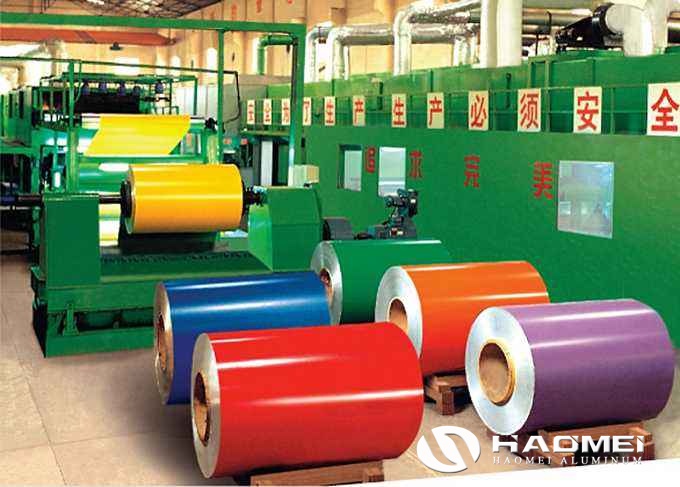
What "Powder Coated + Brushed" Really Means
A brushed finish is a mechanical surface texture created before coating (typically via belt brushing). Powder coating is then applied to protect that texture and add color, durability, and chemical resistance.
Key point: the brushing pattern is only as good as the substrate quality and process control. Coil vs sheet brushing, grit progression, and line speed all influence whether the "grain" reads uniform on a facade or whether you see banding under raking light.
Recommended Alloys for Powder Coated Brushed Aluminum
Alloy selection affects formability, strength, corrosion performance, and how the brush grain presents. Below are the common workhorses I see specified most often.
| Alloy | Typical Use Form | Why It's Chosen | Notes for Brushed + Powder |
|---|---|---|---|
| 3003 | Sheet/coil, interior/exterior cladding | Excellent formability, stable brushing | Great for decorative panels with moderate strength needs |
| 5052 | Sheet/plate, trims, marine-adjacent | Higher strength than 3003, good corrosion resistance | Good for coastal exposure when combined with robust pretreatment |
| 6063 | Extrusions (frames, rails, profiles) | Best surface quality for extrusions, good anodizing/powder response | Common for architectural profiles; consistent brushing on extrusions needs care |
| 6061 | Plate/extrusions with structural needs | Higher strength, good machinability | Brushing can highlight alloy contrast; specify appearance standard if critical |
| 1100 | Decorative sheet | Very high purity, excellent brushing | Softer; dent resistance is lower, so choose wisely for high-traffic areas |
When customers ask me "what's the safest spec," I usually steer architectural sheet toward 3003 or 5052 (depending on strength and corrosion needs) and extrusions toward 6063 for appearance-critical work.
Common Tempers and What They Do
Temper matters because it drives strength, bend radius, springback, and dent resistance.
| Temper | Typical Alloys | Practical Meaning | Where It Fits |
|---|---|---|---|
| H14 / H24 | 3003, 5052 | Medium strength, good forming | Brake-formed trims, cassette panels |
| H32 | 5052 | Strain-hardened + stabilized | Better dent resistance for exterior skins |
| O (annealed) | 3003, 1100 | Softest, tight forming | Complex shapes; protect from handling dents |
| T5 / T6 | 6063, 6061 | Heat-treated; higher strength | Extrusions; T5 common for 6063 architectural |
For brushed architectural sheet that still needs to hold flatness, 5052-H32 is often a sweet spot. For extrusions, 6063-T5 is a reliable standard.
Coating Systems: Powder Choices That Match Real-World Exposure
Not all powder coats are equal. The resin system should be selected based on UV exposure, chalk resistance, and chemical exposure.
Polyester (TGIC or TGIC-free): The mainstream architectural choice; strong UV durability.
Super-durable polyester: Higher UV performance and color stability; good for long-life facades.
PVDF liquid (not powder): Sometimes specified for maximum weathering, but if you need powder, super-durable polyester is the common pathway.
Epoxy or epoxy-polyester hybrid: Strong chemical resistance; better suited to interior or sheltered applications due to UV chalking.
Film build is usually in the 60–100 μm range depending on spec. Too thin and you lose barrier protection; too thick and you risk orange peel that can visually compete with the brushing grain.
Pretreatment: The Hidden Determinant of Corrosion Performance
In the field, premature coating failures are more often pretreatment-related than powder-related. For powder coated brushed aluminum, pretreatment must be compatible with the alloy and the service environment:
Chromate conversion (legacy but effective; regulated in many regions)
Chrome-free conversion coatings (widely adopted; performance depends heavily on process control)
Pretreatment + primer for aggressive environments (coastal, industrial)
If your application is coastal or high-humidity with salt exposure, I strongly prefer a system with high-quality conversion coating plus a powder formulated for exterior durability.
Core Properties of Powder Coated Brushed Aluminum
Visual and tactile quality
Brushed grain provides a premium metallic look with controlled reflectivity.
Powder can be tuned from matte to satin to gloss; satin often best preserves the brushed character.
Corrosion resistance
Excellent barrier protection when pretreatment is correct.
Edges and cut-outs still require attention (edge sealing or design to avoid water traps helps).
Abrasion and stain resistance
Better than bare brushed aluminum for cleaning cycles.
Suitable for public-facing areas when paired with an appropriate powder hardness and texture.
Fabrication compatibility
Works with bending, punching, routing, and forming.
Always validate: brushing direction, protective film, and bend orientation to avoid visual mismatch.
Advantages I See Customers Capture Most Often
Consistent appearance at scale: Powder coating reduces batch-to-batch variation compared with raw brushed aluminum, especially when projects are phased.
Lower maintenance burden: Brushing alone shows fingerprints and oxidation over time; powder reduces both.
Design flexibility: You can keep the brushed "metal read" while shifting the tone (silver, champagne, bronze, charcoal).
Good ROI for architectural envelopes: When you balance coating durability against repainting cycles, powder coated brushed aluminum often wins on life-cycle cost.
If you're sourcing for repeat programs (retail rollouts, standard facade modules), it's worth aligning specifications with a stable product route such as Powder Coated Aluminum in sheet and coil formats, then locking brushing and gloss standards with control samples.
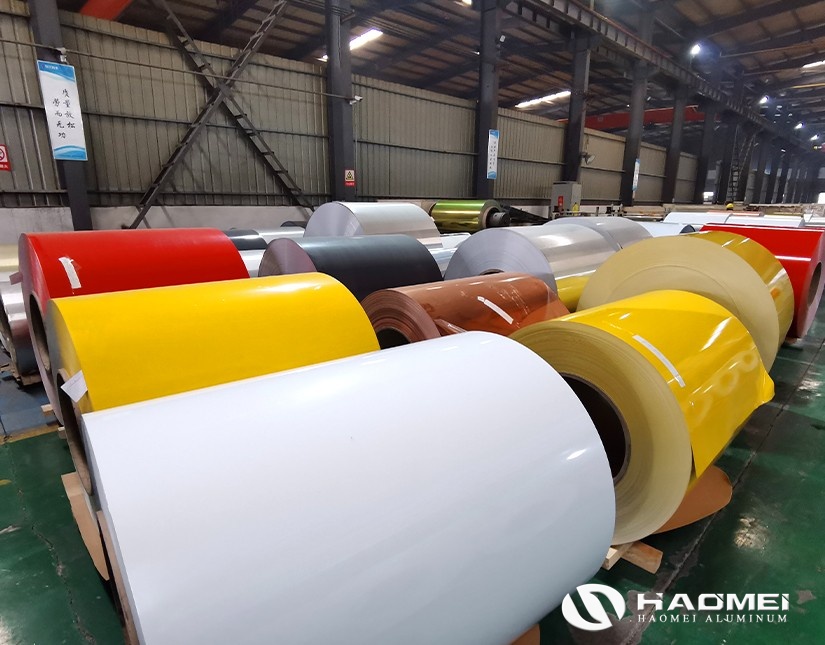
Typical Applications (Where Brushed + Powder Makes Sense)
Architecture and building envelope
Rainscreen cladding panels
Column covers and soffits
Canopies, louvers, and sunshades
Window/door trims (often with 6063 profiles)
Interior design and retail fit-out
Feature walls, elevator surrounds
Storefront trim packages
Decorative ceiling baffles
Transportation and equipment aesthetics
Interior panels and covers where abrasion resistance matters
Housings requiring a premium metallic look
Signage and branding
Brushed metal aesthetic with controlled color and improved outdoor durability
If your project needs a predictable supply chain for formed parts, I recommend specifying the base product as Powder Coated Aluminium Sheet, then defining brushing direction (longitudinal vs transverse), gloss range, and a delta-E tolerance for color.
Practical Spec Tips (What I Advise Based on Field Experience)
Define the brushed standard: Grain length, scratch pattern, and viewing distance. A small lab panel can look perfect; a 3 m panel under sunlight is the real test.
Control brushing direction in drawings: This prevents mismatched grain across adjacent panels.
Ask for a cleaning recommendation: Some aggressive cleaners can dull appearance over time, even with powder.
Plan for fabrication protection: Use protective film, clean gloves, and avoid sliding stacks that can print or scuff the finish.
Edge design matters: Powder protects faces well; edges and fastener points need thoughtful detailing.
What to Provide When Requesting a Quote
To price powder coated brushed aluminum accurately (and avoid delays), these details matter:
Alloy and temper (or performance requirement)
Thickness, width, length (sheet) or coil ID/OD and width (coil)
Brushing direction and appearance sample (if available)
Powder system requirement (standard polyester vs super-durable)
Gloss target and color standard
End-use environment (interior, exterior, coastal/industrial)
Packaging and protective film requirements
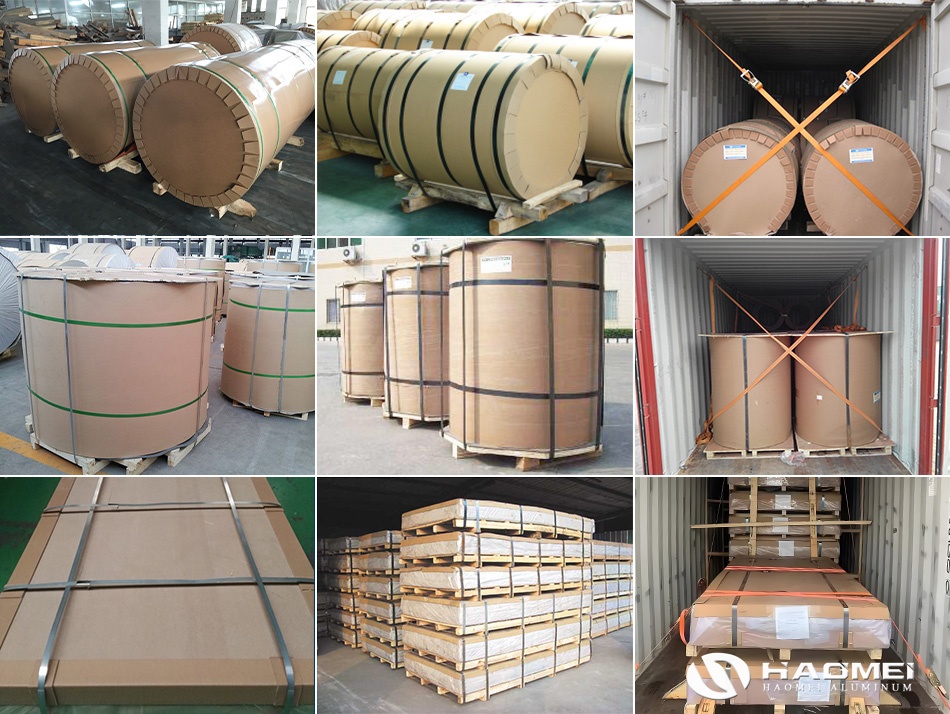
When the alloy/temper and coating system match the environment, powder coated brushed aluminum delivers a premium metal aesthetic with robust real-world durability, whether you're building a landmark facade or standardizing a high-volume retail program.
ABOUT US
PRODUCTS
APPLICATION
CONTACT US
Mobile: +86-18137889531 (same number on WeChat)
Phone: +86-371-65621391
Email: nydia@aluminumhm.com
No.14 Waihuan Road, CBD,
Zhengzhou, China


Copyright © 2026 Haomei Aluminum CO., LTD.