
nydia@aluminumhm.com

News
Haomei Aluminum CO., LTD.
Color Coated Aluminum Sheet Factory
As a color coated aluminum sheet factory, we do not just sell "painted metal." We engineer a laminated system: the right aluminum alloy and temper for forming, the right pretreatment for adhesion, and the right coating chemistry for outdoor durability. When customers ask why one batch bends cleanly while another cracks, or why one facade holds gloss for 15+ years while another fades in 3, the answers almost always come back to alloy selection, temper control, and coating build.
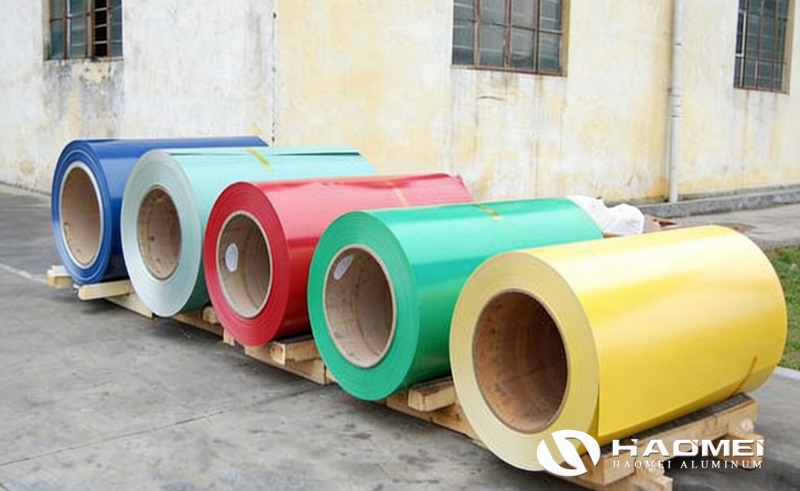
This article introduces the alloys, tempers, properties, advantages, and applications of our color coated aluminum sheet, based on practical production and market experience.
What We Produce: Sheet, Coil, and Coating Systems
Color coated aluminum sheet is typically produced by continuous coil coating (roller coating) and then cut-to-length. This route gives better coating uniformity and higher throughput than post-painting fabricated parts.
If you are sourcing for ongoing fabrication, I recommend specifying coil whenever possible and using conversion to sheet as the last step. It reduces color batch risk and improves consistency for large projects.
For product references, you can compare our Color Coated Aluminium Sheet ranges, or for continuous lines and tight color control, our Color Coated Aluminum Coil programs.
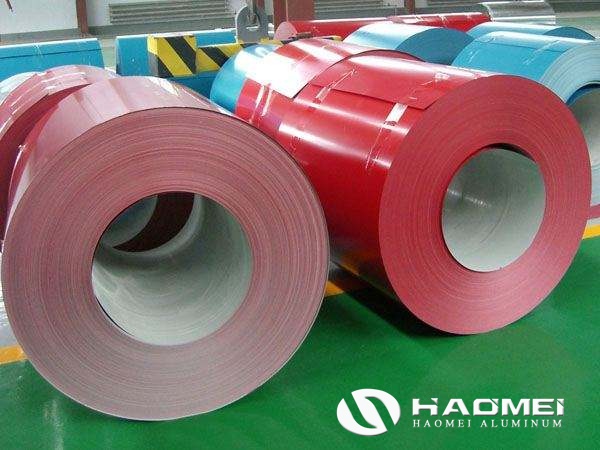
Recommended Alloys for Color Coated Aluminum Sheet
Alloy choice is not only about strength. It affects bending radius, surface appearance after forming (orange peel), corrosion behavior, and even coating adhesion stability over time.
Main alloy families used in coated sheet
1xxx series (e.g., 1060): high purity, excellent formability and thermal conductivity, lower strength. Often used where deep drawing is limited and flatness/price matters.
3xxx series (e.g., 3003, 3004, 3105): manganese alloyed; the workhorse for architectural cladding, ceilings, roller shutters, and general sheet metal.
5xxx series (e.g., 5052): magnesium alloyed; higher strength and better salt spray resistance, preferred in marine/coastal, transportation, and more demanding corrosion environments.
Practical alloy selection table
| Alloy | Typical temper options | Key strengths | Common applications |
|---|---|---|---|
| 1060 | O, H14, H24 | Excellent formability, smooth surface, cost-effective | Interior panels, signage backing, insulation jacketing |
| 3003 | H14, H24 | Balanced formability/strength, stable supply | General sheet metal, trims, ceilings |
| 3004 | H14, H24 | Higher strength than 3003, good forming | Shutters, thicker facade elements |
| 3105 | H14, H24 | Very common in building sheet, consistent coil coating | Roofing, wall cladding, gutters |
| 5052 | H32, H34 | Stronger, superior corrosion resistance | Coastal cladding, transport panels, equipment housings |
From an industry point of view, 3105 H24 and 3003 H24 remain the most "forgiving" specifications for bending and roll forming in everyday fabrication. When I see repeated edge cracking complaints, the root cause is often a temper that is too hard (H18/H19) or a bend radius that is too tight for the gauge.
Tempers Explained (and Why They Matter)
Temper defines how the aluminum was strain-hardened or annealed. For coated products, you are usually choosing between:
O (annealed): maximum ductility, best for deep drawing and tight bends, lower strength.
H14: half-hard; moderate strength with reasonable formability.
H24: strain-hardened and partially annealed; an excellent compromise for roll forming and press bending.
H32/H34 (common for 5052): controlled stabilization gives reliable mechanical performance, especially in corrosive service.
Personal insight from production claims: for the same alloy and thickness, a switch from H14 to H24 can noticeably reduce "oil canning" in wide panels while still keeping bend performance acceptable. That is why many architectural projects default to H24.
Coating Options: PE vs PVDF (and When Each Wins)
Coating selection should be based on service life expectations, UV exposure, and chemical environment.
PE (Polyester): economical, good color range, suitable for interior and light exterior use.
PVDF (70% PVDF fluorocarbon): premium weatherability, excellent UV resistance and color retention, preferred for facades and long-life roofing.
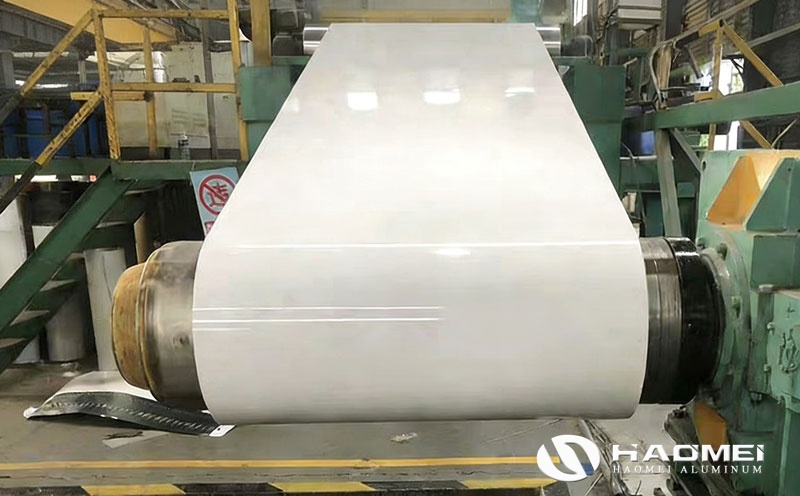
Coating system components we control
Pretreatment: chromate-free or traditional systems depending on customer requirement; critical for adhesion and corrosion resistance.
Primer: improves adhesion and barrier protection.
Topcoat: PE, SMP (when applicable), or PVDF.
Back coat: service coat or wash coat, depending on installation method and budget.
If a project is coastal, high-UV, or owner-driven (long warranty expectations), PVDF is usually the safer technical decision. For interior ceilings, appliance panels, or short-cycle signage, PE is often the value leader.
Key Properties Customers Care About
From factory QA and downstream fabrication feedback, these are the properties that decide whether a coated sheet performs smoothly:
Adhesion (cross-hatch and T-bend): determines whether the coating stays intact during forming.
Color consistency (ΔE control): critical for facade lots; coil-to-coil management is a real differentiator between suppliers.
Gloss and texture stability: matte finishes hide fabrication marks better but can show handling stains if not packaged correctly.
Corrosion resistance: depends on alloy, pretreatment, primer, and coating thickness.
Impact and scratch resistance: packaging and protective film choice matter as much as paint hardness.
Flatness and residual stress: affects panel "oil canning," especially in thin gauges and wide widths.
Advantages of Factory-Prepainted Aluminum (Compared with Post-Painting)
Uniform film thickness and curing through controlled line speed, oven profile, and viscosity management.
Higher productivity for fabricators: no paint shop, faster lead times for finished parts.
Better repeatability: standardized coating build, fewer operator variables.
Lower lifecycle cost for exterior PVDF systems: less repainting, fewer service interventions.
A market reality: when aluminum prices swing (LME + regional premium), buyers sometimes focus only on base metal cost. In practice, for exterior architecture, the coating system is often the cheapest part to get wrong. Replacing a faded wall elevation costs far more than choosing PVDF or specifying a slightly higher coating thickness from the start.
Typical Applications We Support
Color coated aluminum sheet is used where appearance and corrosion resistance must coexist with light weight:
Architectural cladding and curtain wall panels (PVDF strongly preferred)
Roofing and soffit systems
Ceilings, baffles, and interior decorative panels
Roller shutters and doors (often 3004/3105 in H24)
Gutters, fascia, trims
Transportation panels and equipment housings (often 5052 for stronger corrosion performance)
Signage and display systems
What to Specify When Requesting a Quote (Factory-Friendly and Risk-Reducing)
If you want stable pricing and consistent performance, provide these details up front:
Alloy and temper (e.g., 3105 H24)
Thickness, width, and length (or coil ID/OD if sourcing coil)
Coating type (PE/PVDF), color code, gloss level, and texture
Coating thickness requirement and primer/back coat requirements
Protective film type (if needed) and intended fabrication (bending, roll forming, stamping)
End-use environment (interior, coastal, industrial, high-UV)
From my experience, the most avoidable disputes in coated sheet purchasing come from missing details about bend radius expectations and installation environment. If we know those two factors early, we can recommend the alloy/temper and coating system that performs predictably, not just the one that looks good on delivery day.
ABOUT US
PRODUCTS
APPLICATION
CONTACT US
Mobile: +86-18137889531 (same number on WeChat)
Phone: +86-371-65621391
Email: nydia@aluminumhm.com
No.14 Waihuan Road, CBD,
Zhengzhou, China


Copyright © 2026 Haomei Aluminum CO., LTD.