
nydia@aluminumhm.com

News
Haomei Aluminum CO., LTD.
Coated Aluminum Coil Manufacturer
Selecting a coated aluminum coil manufacturer is no longer a simple price comparison. Buyers now have to balance coating durability, alloy suitability, dimensional control, compliance paperwork, and logistics risk. In practical export work, the best outcomes come when the importer treats the coated coil as an engineered system: base metal + pretreatment + coating + curing + packing + traceability.
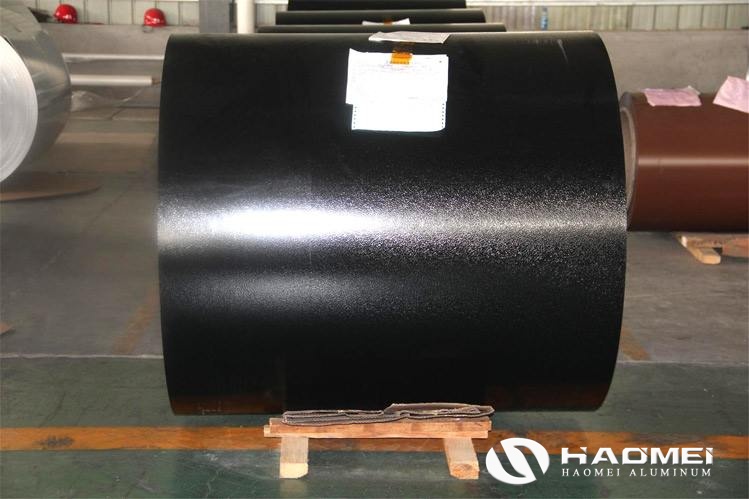
What a coated aluminum coil manufacturer actually delivers (beyond paint)
A qualified coated aluminum coil manufacturer provides repeatable performance, not just color. That performance is built on several linked steps:
Substrate selection: common alloys include 1100, 3003, 3004, 3105, and 5052. Each behaves differently in forming, strength, and corrosion environments.
Surface preparation: cleaning, conversion coating (often chrome-free today), and controlled surface tension so paint wets and adheres.
Coating application: primer + topcoat (and sometimes backcoat), controlled by wet film thickness, viscosity, roll pressure, and line speed.
Curing: metal temperature and dwell time determine crosslink density, hardness, and flexibility.
Inspection + traceability: coil ID, production batch, coating lot, and test records tied to each shipment.
When evaluating a coated aluminum coil manufacturer, ask to see the process flow, the in-line control points, and a sample of a complete coil test report. This reveals whether quality is designed into the line or checked after the fact.
Coated aluminum coil manufacturer checklist: alloy, temper, and thickness decisions
A frequent cause of claims is a mismatch between forming requirements and the specified temper. A capable coated aluminum coil manufacturer will challenge vague specs and confirm the forming process (roll forming, stamping, bending radius) before production.
Key technical points to clarify:
Alloy:
3003/3105 are common for roofing, cladding, and general forming.
5052 is chosen when higher strength or marine exposure is involved.
Temper:
H14/H24 are often used where moderate forming is needed.
H18 is stiffer but less forgiving for tight bends.
Thickness and tolerance: define both nominal thickness and allowed variation. For high-speed roll forming, tighter tolerance reduces profile drift.
Coil ID/OD and weight: match your decoiler limits and plant handling.
If a coated aluminum coil manufacturer cannot propose an alloy/temper combination based on your end-use, you may end up paying for rework, cracked bends, or oil-canning.
Coating systems a coated aluminum coil manufacturer should be able to explain
Coating selection should be driven by exposure, expected service life, and forming severity. A professional coated aluminum coil manufacturer can explain the trade-offs in plain terms and provide verifiable test data.
Typical systems:
PE (Polyester): cost-effective for indoor, signage, and moderate exterior use. Good color range, decent formability.
PVDF (70% fluorocarbon): premium exterior durability for architectural facades, coastal climates, and strong UV exposure.
SMP/HDPE (market-dependent): improved hardness and weathering versus standard PE, useful for demanding roofing.
Recommended spec details to include in a PO:
Coating type (PE, PVDF, SMP)
Topcoat thickness (e.g., 18–25 microns) and primer thickness
Color standard (RAL, Pantone, or physical approval sample)
Gloss range and allowable delta
Protection film requirement (type, thickness, adhesion level)
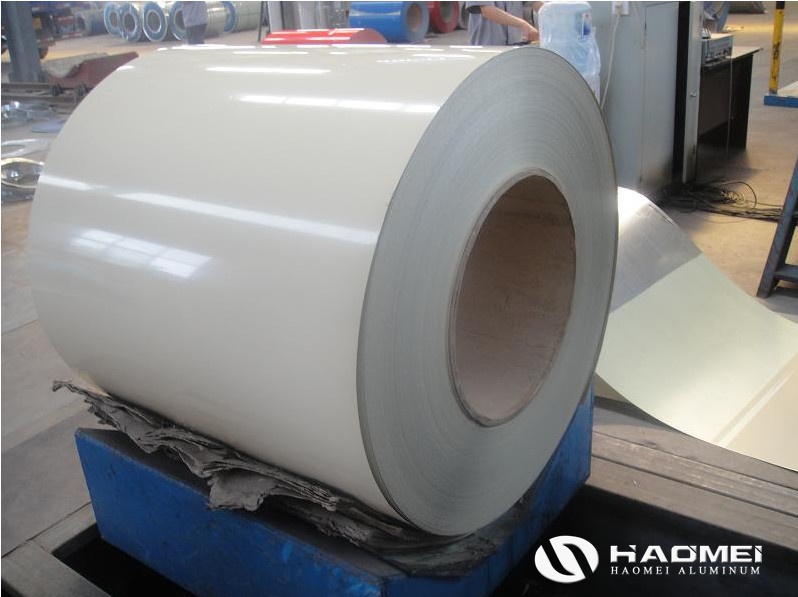
A coated aluminum coil manufacturer that avoids committing to film thickness, curing conditions, or test standards is difficult to hold accountable if fading, chalking, or delamination occurs.
Quality control tests to request from a coated aluminum coil manufacturer
Importers often rely on a single "QC pass" photo. That is not enough. A reliable coated aluminum coil manufacturer should provide routine test data and allow third-party inspection.
Practical test list (commonly used across markets):
Coating thickness (top, primer, backcoat)
Gloss and color difference (ΔE) versus standard
T-bend (flexibility) and impact resistance
Cross-hatch adhesion
Pencil hardness
MEK rub (cure resistance)
Salt spray / humidity (when relevant to the application)
Dimensional checks: width, camber, edge condition, coil telescoping
From an export risk perspective, insist that the coated aluminum coil manufacturer ties the report to the coil number and includes calibration records for key gauges.
Packaging and container loading: where coated coil shipments often fail
Even when production quality is strong, many disputes start at arrival due to transit damage. An experienced coated aluminum coil manufacturer treats packaging as part of product quality.
Common packaging requirements for overseas shipping:
Moisture protection (VPI paper or equivalent) and desiccant quantity matched to route duration
Strong edge protectors and ID tags that remain readable after handling
Anti-abrasion separation between coils/sheets
Pallet base engineered for forklift entry and container floor stress
Clear markings: alloy/temper, thickness, net/gross weight, coil number
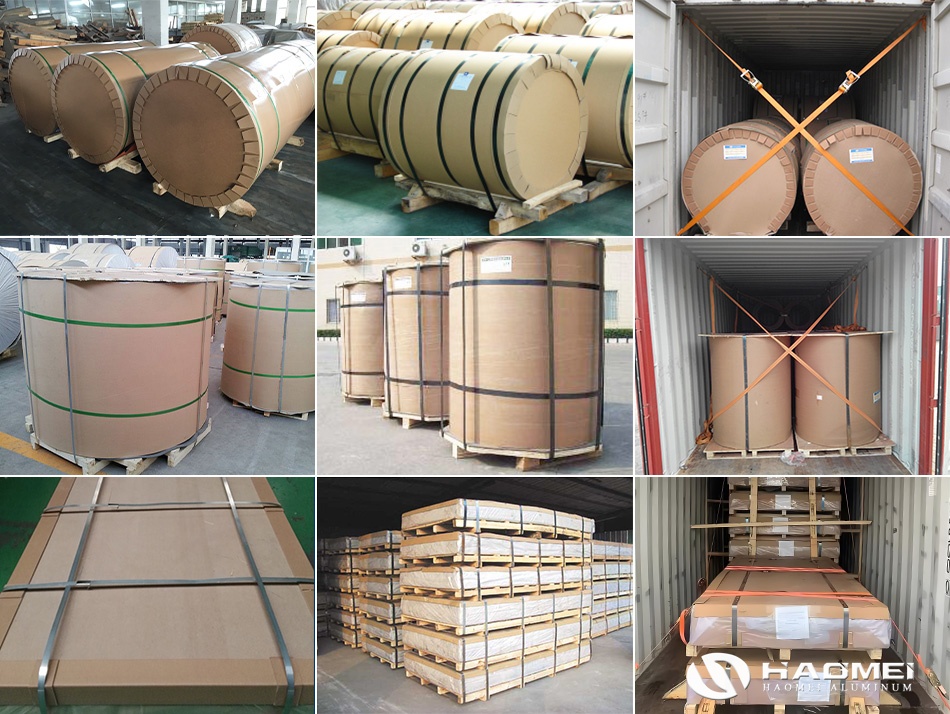
Ask your coated aluminum coil manufacturer for photos of the exact packing style used for your last few export containers, plus a container loading plan. This is especially important for humid routes and ports with longer dwell time.
Specifying products with fewer misunderstandings (the "export PO language")
The fastest way to reduce re-quoting and production errors is to write a PO that a coated aluminum coil manufacturer can execute without assumptions.
A robust specification usually includes:
Substrate: alloy, temper, thickness, width, tolerance
Coating: system (PE/PVDF), thickness, color standard, gloss, texture (if any)
Surface: one side/two sides, backcoat color and thickness
Film: with/without protection film; adhesion level for your forming process
Standards: referenced test methods and acceptance criteria
Quantity: coil count, maximum coil weight, ID/OD
Packing: export seaworthy packing, container type, labeling requirements
If you are sourcing Coated Aluminum Coil for roll forming, specify forming direction requirements and whether spangle/roller marks are acceptable. If you need a broader product range for distributors, align naming with regional expectations using Color Coated Aluminum Coil terminology on cartons and documents.
Market observations: what importers should watch in 2026 sourcing cycles
A strategic coated aluminum coil manufacturer will talk openly about factors that affect continuity and total landed cost. Current patterns that matter to buyers:
Coating resin and pigment volatility: premium systems (PVDF, certain metallic colors) can move differently than base aluminum.
Compliance expectations: more projects require traceability, chrome-free pretreatment, and documented coating performance.
Lead time spread: high season can widen gaps between standard PE and PVDF or specialty textures.
Width and thickness capability: not all lines run wide coils or heavy gauges without sacrificing flatness.
Working with a coated aluminum coil manufacturer that can lock technical parameters early and communicate schedule risk clearly is often more valuable than a slightly lower unit price.
How to qualify a coated aluminum coil manufacturer in China for long-term supply
For global buyers, China remains competitive, but supplier qualification must be systematic. When auditing a coated aluminum coil manufacturer, focus on evidence rather than claims:
Production line capability: coating line speed range, ovens, tension control, slitting capability, and maximum coil weight
Raw material control: base coil sourcing channels, incoming inspection, and batch segregation
Lab capacity: ability to run adhesion, flexibility, thickness, gloss, and cure tests in-house
Export documentation: packing list discipline, HS code consistency, and certificate management
Corrective action discipline: how they handle nonconformance, not whether it ever happens
A practical approach is to begin with a pilot order and set measurable acceptance criteria. A mature coated aluminum coil manufacturer will accept third-party inspection, provide retained samples, and support your customer claims process with traceable data.
Applications where the right coated aluminum coil manufacturer changes project outcomes
Different end uses stress the coating and substrate in different ways. Choosing a coated aluminum coil manufacturer that understands the application reduces downstream risk:
Roofing and wall cladding: weathering, chalking resistance, flatness, and color consistency across lots
Rainwater systems (gutters, downpipes): bend performance, cut-edge corrosion behavior, film adhesion
Appliance panels and enclosures: fingerprint resistance, scratch resistance, tight color matching
Insulated panels and sandwich systems: coating heat resistance during lamination and foam reaction compatibility
If your buyers demand long warranties, align warranty language with the coating system and exposure category, and ensure your coated aluminum coil manufacturer can provide matching performance documentation rather than generic statements.
Practical negotiation points that protect both sides
A stable relationship with a coated aluminum coil manufacturer is built on shared clarity:
Agree on a pre-shipment approval method: retained sample, signed color panel, or digital standard plus ΔE limit
Define claim windows and what constitutes transport damage vs production defects
Use an inspection plan: in-process checks, finished coil checks, and container loading verification
Lock critical parameters: coating thickness, gloss, and alloy temper, and treat them as change-controlled
When these elements are in place, the buyer gets predictability and the coated aluminum coil manufacturer reduces rework and disputes, which is the core driver of sustainable export pricing.
ABOUT US
PRODUCTS
APPLICATION
CONTACT US
Mobile: +86-18137889531 (same number on WeChat)
Phone: +86-371-65621391
Email: nydia@aluminumhm.com
No.14 Waihuan Road, CBD,
Zhengzhou, China


Copyright © 2026 Haomei Aluminum CO., LTD.