
nydia@aluminumhm.com

News
Haomei Aluminum CO., LTD.
White Gutter Coil
White gutter coil is one of the most practical and widely used prefinished aluminum products in the residential and light commercial building market. As someone who follows aluminum coil pricing, coating performance, and downstream fabrication closely, I see white gutter coil as a product where material selection and surface quality matter just as much as appearance. A gutter system may look simple from the ground, but the coil behind it must balance formability, corrosion resistance, paint adhesion, color stability, and cost control.
In the gutter industry, white remains the dominant color because it matches most fascia boards, soffits, siding profiles, and trim systems. It also reflects heat better than darker colors, which helps reduce thermal stress on exposed metal surfaces. For contractors, distributors, and roll-forming shops, a stable supply of white aluminum gutter coil means smoother installation schedules, fewer color matching problems, and better long-term customer satisfaction.
What Is White Gutter Coil?
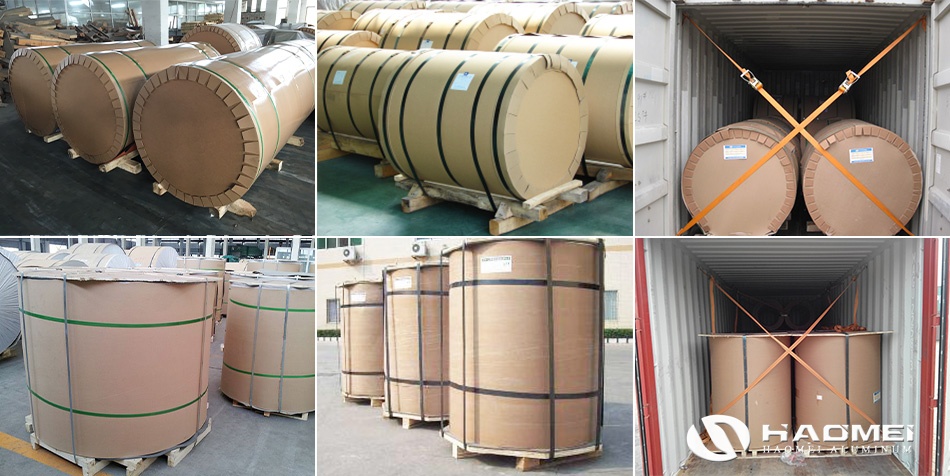
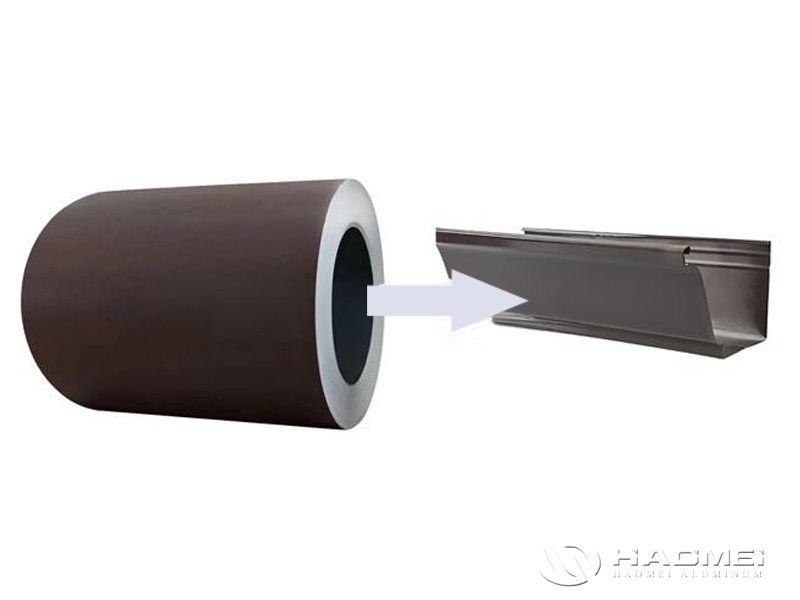
White gutter coil is pre-painted aluminum coil designed for roll forming into seamless gutters, downspouts, elbows, fascia trim, and related drainage components. The material is usually supplied in master coils or slit coils, with common widths such as 11.75 inches, 15 inches, and 18 inches depending on the gutter profile and local market preference.
The coil is coated before fabrication, meaning the paint system is applied on a continuous coating line under controlled conditions. This gives the finished gutter a more uniform color and better coating consistency than post-painted parts. A good white gutter coil should have a clean surface, even gloss, strong paint adhesion, minimal edge wave, and reliable mechanical properties during roll forming.
Common Alloys for White Gutter Coil
Most white gutter coil is produced from 3000 series aluminum, especially 3003 and 3105. These alloys offer a strong combination of corrosion resistance, moderate strength, excellent formability, and good coating compatibility.
| Alloy | Main Features | Typical Use in Gutter Products |
|---|---|---|
| 3003 | Good corrosion resistance, easy forming, stable performance | Standard seamless gutters and downspouts |
| 3105 | Better strength than 3003, excellent paintability, widely used for building products | Premium gutter coil, fascia, trim coil |
| 3004 | Higher strength, good durability, suitable for demanding profiles | Heavy-duty gutter systems and formed accessories |
From my experience, 3105 is often preferred when customers want a stronger coil with consistent coating behavior. It performs well in continuous roll forming and is commonly used for architectural aluminum products. 3003 remains a cost-effective and dependable option, particularly where extreme strength is not required. For buyers comparing offers, the alloy is not just a technical line on a quotation. It directly affects forming stability, service life, and claims risk.
Tempers: Why H24, H26, and H28 Matter
Temper selection is critical because gutter coil must be stiff enough to hold shape but flexible enough to pass through roll-forming equipment without cracking or paint damage.
| Temper | Characteristics | Practical Comment |
|---|---|---|
| H24 | Half-hard, balanced ductility and strength | A very common choice for seamless gutter forming |
| H26 | Higher strength, reduced ductility | Suitable when more rigidity is required |
| H28 | Harder temper, better shape retention | Used where profile stability is prioritized |
For most seamless gutter machines, H24 provides a good working balance. It allows smooth forming around bends and corners while maintaining enough rigidity after installation. H26 and H28 can be useful for specific product designs, but they require closer attention to machine setup, bend radius, and coating flexibility. If the temper is too hard for the profile, micro-cracking can occur at bends. If it is too soft, the finished gutter may feel weak or deform during handling.
Key Properties of Quality White Gutter Coil
A professional white gutter coil should deliver stable performance in several areas:
Corrosion resistance: Aluminum naturally forms an oxide layer, and the coating system adds further protection against rain, humidity, and environmental exposure.
Formability: The coil must withstand roll forming, cutting, notching, and bending without cracking.
Paint adhesion: Strong adhesion helps prevent peeling, flaking, and premature coating failure.
Color consistency: White is sensitive to shade variation, so batch control is important for large projects.
Weather resistance: Outdoor exposure demands resistance to UV radiation, chalking, and gloss loss.
Flatness and edge quality: Good coil shape reduces production interruptions and improves finished appearance.
Coating thickness and paint type also deserve attention. Polyester systems are widely used for standard gutter products because they are cost-effective and attractive. For harsher climates or premium architectural projects, higher-performance coatings may be selected to improve fade resistance and service life.
Advantages of White Aluminum Gutter Coil
1. Clean appearance and broad compatibility
White blends easily with most exterior designs. Whether the building uses vinyl siding, painted wood trim, stucco, or metal fascia, white gutter coil usually provides a neat and unobtrusive finish.
2. Lightweight but durable
Aluminum is much lighter than steel, making it easier to transport, handle, and install. This advantage is especially valuable for seamless gutter contractors who work on-site with portable roll-forming machines.
3. Excellent corrosion performance
Unlike ordinary steel, aluminum does not rust. In rainwater drainage applications, this is a major benefit. A properly coated aluminum gutter coil can perform for many years with limited maintenance.
4. Efficient fabrication
White gutter coil is supplied ready for roll forming. Contractors can produce long seamless gutter sections at the job site, reducing joints and leakage points. This improves both installation efficiency and system performance.
5. Strong value in the market
From a market perspective, white gutter coil has stable demand and high turnover. For distributors, it is one of the essential inventory colors. For manufacturers, it is a product where consistent quality can build repeat orders quickly.
Typical Specifications
Specifications vary by region, but the following ranges are commonly seen in the market:
| Item | Common Range |
|---|---|
| Thickness | 0.019 in, 0.024 in, 0.027 in, 0.032 in |
| Width | 11.75 in, 15 in, 18 in, custom slit widths |
| Alloy | 3003, 3105, 3004 |
| Temper | H24, H26, H28 |
| Surface | Pre-painted white finish |
| Inner diameter | 16 in, 20 in, or customized |
| Packaging | Eye-to-wall or eye-to-sky, with protective wrapping |
Thickness selection should match local building codes, gutter size, snow load, and customer expectations. In price-sensitive markets, thinner coil may move faster, but for premium installations, thicker material often reduces callbacks and improves perceived quality.
Applications of White Gutter Coil
White gutter coil is mainly used in:
Seamless residential gutters
Commercial rainwater drainage systems
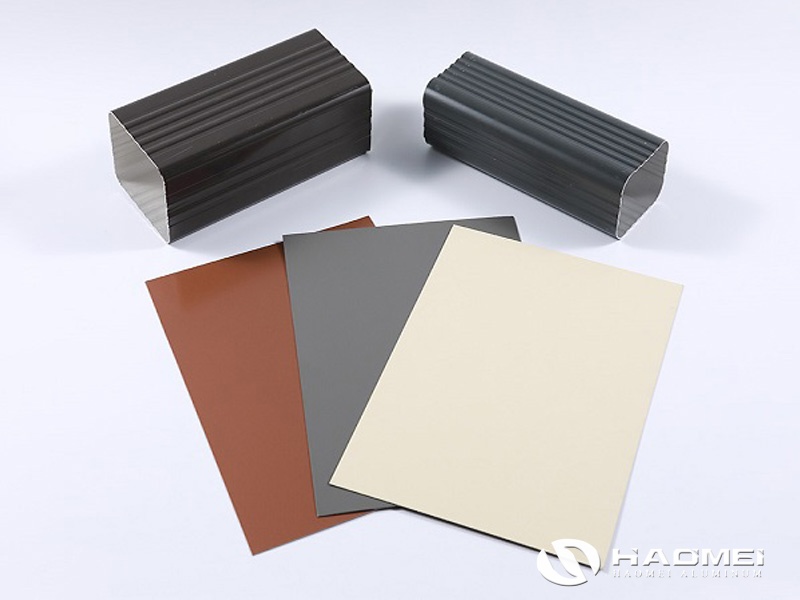
Downspouts and elbows
Fascia and roof trim
Soffit accessories
Decorative exterior flashing
Light architectural profiles
Its strongest application is seamless gutter production. The installer can bring a portable machine to the site, feed the coil, and form gutters to the exact required length. This reduces waste, avoids unnecessary seams, and creates a cleaner exterior line.
Buying Advice from an Industry Perspective
When sourcing white gutter coil, price is important, but it should not be the only factor. I always recommend checking alloy, temper, coating type, paint thickness, color tolerance, coil weight, packaging method, and supplier consistency. A low price can become expensive if the coil has poor flatness, unstable coating, or frequent roll-forming issues.
Packaging is also worth serious attention. Gutter coil travels through warehouses, containers, trucks, and job sites before it becomes a finished product. Moisture protection, edge protection, and firm coil fixing help prevent scratches, water stains, and deformation. For export orders, strong seaworthy packaging is not optional. It is part of the product quality.
Another practical point is color control. White may look simple, but different whites can vary noticeably under daylight. If a project requires multiple coils, using the same batch or confirming color tolerance in advance can prevent installation disputes.
Market Outlook for White Gutter Coil
Demand for white gutter coil is supported by repair, remodeling, new housing, and commercial maintenance. Even when aluminum prices fluctuate, gutter coil remains a necessary building material with steady consumption. The market rewards suppliers who can offer stable lead times, accurate specifications, and dependable surface quality.
For contractors and distributors, choosing the right white gutter coil means fewer machine adjustments, cleaner formed profiles, better customer feedback, and stronger margins. For manufacturers, controlling alloy chemistry, temper accuracy, coating performance, and packaging quality is the foundation of long-term competitiveness.
White gutter coil may be a familiar product, but it is never a product to treat casually. Behind every clean roofline is a coil that must perform through forming, installation, and years of outdoor exposure. Selecting the right alloy, temper, finish, and supplier is the best way to turn a simple white coil into a reliable drainage solution.
ABOUT US
PRODUCTS
APPLICATION
CONTACT US
Mobile: +86-18137889531 (same number on WeChat)
Phone: +86-371-65621391
Email: nydia@aluminumhm.com
No.14 Waihuan Road, CBD,
Zhengzhou, China


Copyright © 2026 Haomei Aluminum CO., LTD.