
nydia@aluminumhm.com

News
Haomei Aluminum CO., LTD.
Prepainted Aluminum Coil Manufacturer
As a prepainted aluminum coil manufacturer, we do more than apply color to aluminum. We help customers choose the right base metal, coating system, surface finish, coil width, and tolerance for real working conditions. In the aluminum market, price moves quickly, but performance failures cost far more than a small difference in coil quotation. That is why I always advise buyers to evaluate prepainted aluminum coil from three angles: aluminum alloy, paint system, and end-use environment.
Prepainted aluminum coil is widely used because it combines the light weight and corrosion resistance of aluminum with factory-controlled coating quality. Compared with post-painting, coil coating offers better consistency, faster fabrication, reduced waste, and stable color performance across large production batches.
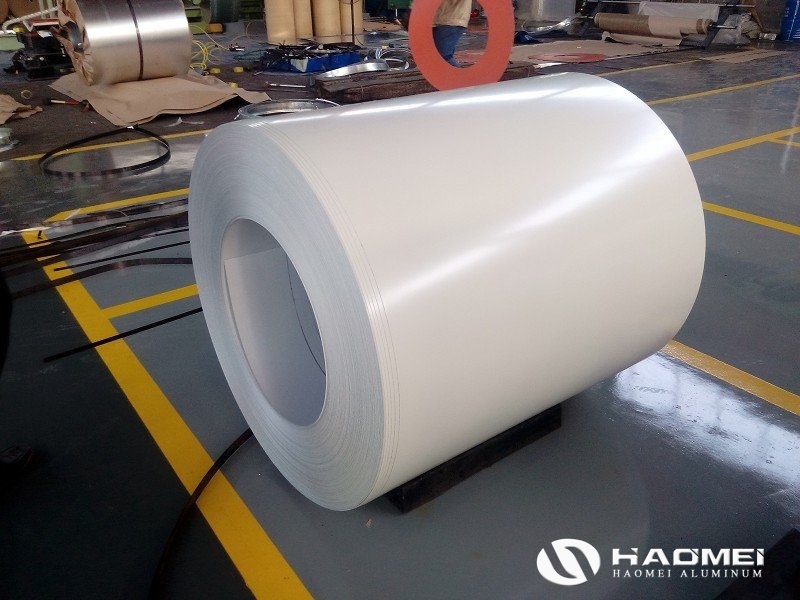
What Is Prepainted Aluminum Coil?
Prepainted aluminum coil is aluminum coil that has been chemically pretreated, coated, baked, cooled, and rewound through a continuous coil coating line. The finished product can be slit, cut into sheet, embossed, laminated, punched, roll formed, or fabricated into building and industrial parts.
A typical structure includes:
Aluminum substrate
Pretreatment layer
Primer coating
Top coating
Optional back coating
Protective film when required
For customers comparing painted aluminum coil options, the key is not only color selection. The real value lies in adhesion, flexibility, weather resistance, coating thickness, gloss control, and batch stability.
Common Alloys for Prepainted Aluminum Coil
Different alloys provide different strength, formability, corrosion resistance, and cost balance. Based on years of supplying building materials, ceiling systems, roofing products, signage, and appliance panels, the following alloys are the most practical choices.
| Alloy | Main Features | Typical Applications |
|---|---|---|
| 1100 | High purity, excellent formability, good reflectivity | Interior panels, decorative sheets, insulation jacketing |
| 3003 | Good corrosion resistance, moderate strength, easy forming | Roofing, wall panels, ceiling panels, general sheet metal |
| 3004 | Higher strength than 3003, good deep drawing performance | Roofing, cladding, rainwater systems, building panels |
| 3105 | Excellent coating compatibility, good strength and formability | Gutters, downspouts, siding, shutters, architectural products |
| 5005 | Good anodizing and surface quality, better strength | Curtain wall panels, decorative facades, high-end interior panels |
| 5052 | High strength, excellent corrosion resistance, marine-friendly | Transport panels, industrial enclosures, outdoor equipment |
For most architectural projects, 3003, 3004, 3105, and 5005 are the most frequently requested. If the part requires severe bending or profiling, we focus strongly on elongation and coating flexibility. If the product is used near coastal or industrial areas, corrosion resistance and paint durability become more important than the lowest material price.
Tempers and Mechanical Performance
Temper selection affects fabrication directly. A good coating cannot compensate for a substrate that is too soft or too hard for the forming process.
| Temper | Characteristic | Suitable Use |
|---|---|---|
| O | Soft, maximum formability | Deep forming, complex shapes |
| H14 | Half hard, balanced strength and bending | Roofing, panels, ceiling products |
| H16 | Stronger than H14, moderate formability | Flat panels, roll forming |
| H24 | Strain hardened and partially annealed | General architectural applications |
| H26 | Higher strength, stable shape | Metal building panels, decorative products |
| H32/H34 | Common for 5052, good corrosion resistance and strength | Industrial and outdoor applications |
In my experience, many buyers focus too much on coating brand and too little on temper. For example, a 3105 H24 coil may perform very well in roll forming, while an unsuitable harder temper can cause cracking at the bend or stress marks on the paint surface. For this reason, we always ask about bending radius, processing method, and final installation environment before recommending a specification.
Coating Systems: PE, PVDF, HDPE, SMP, and FEVE
The paint system determines outdoor durability, gloss retention, chalking resistance, and chemical resistance. The most common coatings include:
PE coating: Economical, good color range, suitable for interior use and short to medium outdoor exposure.
PVDF coating: Excellent weather resistance, UV stability, and color retention. Recommended for facades, roofing, and premium exterior applications.
HDPE coating: High decorative effect, good flexibility, often used for architectural panels and special finishes.
SMP coating: Better durability than standard PE, often selected for roofing and siding.
FEVE coating: High gloss and strong weatherability, suitable for demanding decorative surfaces.
For long-life exterior projects, I generally recommend PVDF or FEVE, especially in high UV, coastal, or industrial environments. PE is cost-effective, but it should be used where its performance level matches the project requirements. A professional prepainted aluminum coil manufacturer should be honest about this difference.
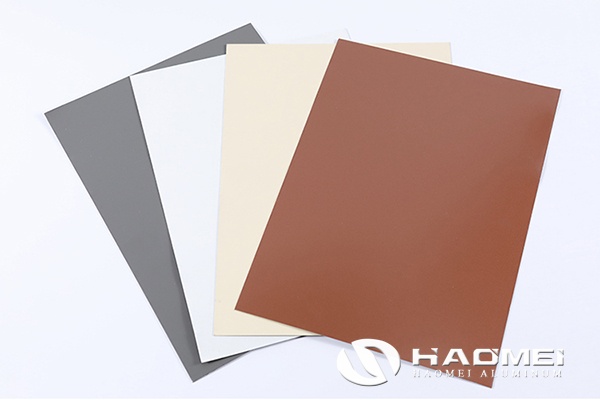
Key Properties of Quality Prepainted Aluminum Coil
A reliable prepainted aluminum coil should offer stable performance in processing and service. Important properties include:
Light weight: About one-third the density of steel, reducing structural load and transport cost.
Corrosion resistance: Aluminum naturally forms a protective oxide layer, improved further by pretreatment and coating.
Excellent formability: Suitable for bending, roll forming, cutting, stamping, and profiling.
Color consistency: Continuous coating lines provide better batch-to-batch uniformity.
Good adhesion: Proper pretreatment and baking ensure paint bonds firmly with the substrate.
Weather resistance: Premium coatings resist UV, rain, humidity, and temperature changes.
Recyclability: Aluminum can be recycled repeatedly, supporting sustainable construction.
When checking quality, I pay close attention to coating thickness, pencil hardness, T-bend performance, impact resistance, solvent resistance, and salt spray results. These tests reveal whether the coil will survive real fabrication and installation.
Advantages of Working with a Professional Manufacturer
Choosing a prepainted aluminum coil manufacturer is not only about buying material. It is about reducing technical risk and keeping production stable.
Our advantages usually include:
Alloy and temper matching: We help choose the correct aluminum base for forming, strength, and corrosion requirements.
Custom colors: RAL colors, wood grain, stone pattern, metallic finish, matte finish, and high gloss finishes are available.
Stable coating control: Coating thickness, curing temperature, gloss, and color difference are monitored during production.
Flexible specifications: Thickness, width, coil weight, inner diameter, and protective film can be customized.
Market-sensitive pricing: Aluminum ingot price, paint cost, exchange rates, and freight all influence final cost. A responsive supplier can help customers purchase at better timing.
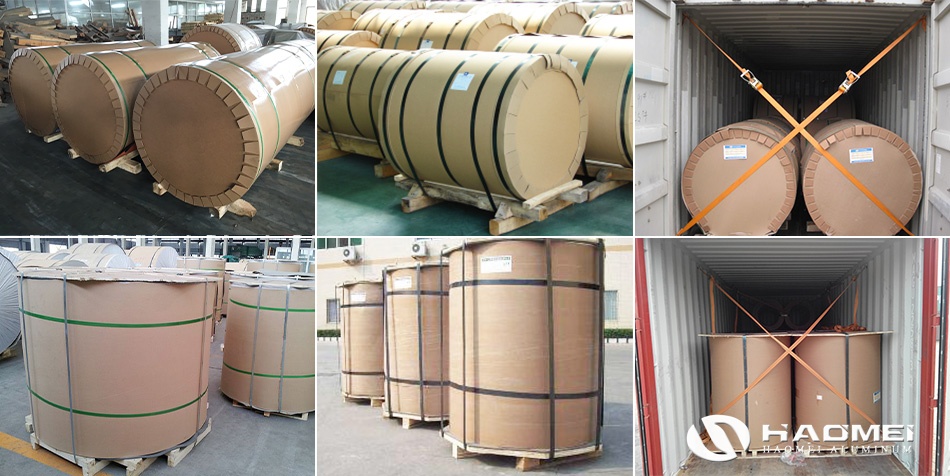
Professional packaging: Eye-to-wall or eye-to-sky packing, moisture protection, edge protection, and export-standard wooden pallets reduce transit damage.
For customers who need related sheet products, pre painted aluminium can also be supplied in cut-to-length sheets for fabrication, signage, and panel processing.
Main Applications
Prepainted aluminum coil is used across construction, decoration, transportation, and industrial manufacturing. Common applications include:
Roofing and wall cladding
Aluminum composite panels
Curtain wall panels
Ceiling systems
Gutters and downspouts
Roller shutters and garage doors
Signage and advertising boards
Home appliance panels
Insulation jacketing
Transportation body panels
Clean room and cold storage panels
Decorative interior panels
Architectural applications are especially demanding because color difference, flatness, and weather resistance are visible to the end user. In facade projects, even a small mismatch between batches can create complaints. That is why production planning and color control are as important as raw material quality.
How to Select the Right Specification
When customers ask for a quotation, I prefer to receive the following details:
Alloy and temper, if already specified
Thickness and width
Coating type, such as PE, PVDF, SMP, HDPE, or FEVE
Color code or sample
Gloss requirement
One-side or two-side coating
Application and forming method
Required test standards
Coil weight and packing method
Destination port or delivery terms
If these details are unclear, a knowledgeable manufacturer should guide the selection instead of simply quoting the cheapest option. For example, a ceiling panel and a coastal roofing sheet may look similar in color, but they require very different coating durability and corrosion protection.
My Practical View on Price and Value
The aluminum market changes quickly. Base metal price, coating resin, energy cost, and logistics can all shift within a short time. As someone who follows these movements closely, I believe the best purchasing decision is not always the lowest unit price. The better choice is a stable specification with predictable processing performance, reliable coating life, and controlled delivery risk.
A professional prepainted aluminum coil manufacturer should provide technical clarity, transparent communication, and consistent quality. When alloy, temper, coating, and application are matched correctly, prepainted aluminum coil becomes a highly efficient material for modern construction and manufacturing.
ABOUT US
PRODUCTS
APPLICATION
CONTACT US
Mobile: +86-18137889531 (same number on WeChat)
Phone: +86-371-65621391
Email: nydia@aluminumhm.com
No.14 Waihuan Road, CBD,
Zhengzhou, China


Copyright © 2026 Haomei Aluminum CO., LTD.