
nydia@aluminumhm.com

News
Haomei Aluminum CO., LTD.
Powder Coated Aluminum Price
When customers ask me about powder coated aluminum price, I usually start with a reality check from the mill-and-coating side of the business: you are not only buying aluminum. You are buying a specific alloy and temper, a surface preparation standard, a powder system, a curing process, and a quality level tied to end-use exposure. If any one of those elements changes, the price moves.
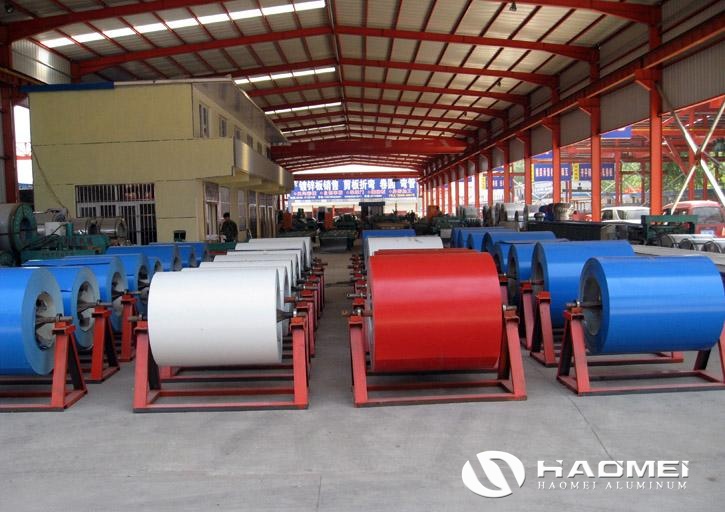
Below is a practical, product-focused way to evaluate price while also understanding what you are getting in terms of mechanical performance, corrosion resistance, color stability, and fabrication behavior.
What "powder coated aluminum" actually includes
Powder coating is a dry finishing process where electrostatically charged powder is applied and then cured to form a continuous film. For architectural and industrial products, the coating performance depends heavily on:
Pretreatment: chromate-free conversion coating or chrome (where permitted), plus cleaning/degreasing.
Powder chemistry: polyester (most architectural), super-durable polyester, PVDF-like powder alternatives in some regions, epoxy (interior/chemical), epoxy-polyester hybrids.
Film build: typically ~60–120 μm depending on specification.
Cure schedule: metal temperature and dwell time; under-cure is a silent failure mode.
If you are comparing offers, make sure you are comparing like-for-like: same alloy/temper, same coating class (standard vs super-durable), same gloss level, and the same pretreatment.
For our catalog products, we most often supply Powder Coated Aluminum in sheet, coil, and fabricated forms designed for consistent forming and reliable outdoor durability.
Common alloys and tempers we recommend (and why)
From an industry perspective, alloy selection is one of the most underrated price levers. The "cheapest" alloy can become expensive if it cracks during forming or creates scrap in fabrication.
Alloy families you will see most often
| Alloy series | Typical grades | Common tempers | Why it's used | Notes that affect price |
|---|---|---|---|---|
| 3xxx (Mn) | 3003, 3105 | H14, H24 | Good formability, good corrosion resistance, cost-effective | Often used for roofing, cladding, trims; stable supply keeps pricing competitive |
| 5xxx (Mg) | 5052, 5005 | H32, H34 | Higher strength than 3xxx, good marine/industrial corrosion resistance | 5005 is popular for architectural anodize/powder; 5052 resists cracking but can carry an alloy premium |
| 6xxx (Mg-Si) | 6063, 6061 | T5, T6 | Extrusions for frames, rails, curtain wall components | Temper control is critical; extrusion quality and straightness affect cost |
My selection guidance from real projects
High-forming parts (deep bends, hems, roll forming): 3105 H24 or 3003 H14 are forgiving and reduce crack-related rework.
Exterior architectural panels where color uniformity is critical: 5005 is a strong candidate because it tends to produce consistent appearance under high-quality powder systems.
Structural extrusion components: 6063-T5 for architectural profiles and 6061-T6 when higher mechanical strength is needed.
Key properties that justify powder coated aluminum pricing
Price is ultimately tied to performance expectations. Powder-coated products are often specified because they provide a high-value combination of:
Corrosion resistance: aluminum's natural oxide layer plus conversion coating plus powder film is a robust system, especially for outdoor building envelopes.
UV and color retention: super-durable polyester powders significantly improve long-term chalk resistance compared with standard polyesters.
Abrasion and impact resistance: powder films are typically tougher than many liquid paints at comparable thickness.
Fabrication compatibility: with correct alloy/temper and controlled film build, coated sheets can be bent and formed with minimal micro-cracking.
In the field, I see the best results when the spec balances temper selection with minimum bend radius and avoids forcing overly hard tempers (e.g., H18) into tight radii.
What drives powder coated aluminum price (practical checklist)
Here are the cost drivers I watch when quoting or reviewing supplier offers:
1) Aluminum base metal and market index exposure
The base cost is tied to primary aluminum price movement plus regional premiums. Even for the same coating and thickness, daily market volatility can shift quotes.
2) Alloy and temper premium
5052 H32 generally prices above 3003/3105 due to alloying and demand.
Tighter mechanical property windows (or specific customer standards) can add cost.
3) Thickness, width, and flatness tolerance
Wider coils and tight camber/flatness requirements typically mean higher yield loss and more process control.
Heavy gauge also increases powder consumption per square meter.
4) Powder system and color
Standard polyester is usually the most cost-effective exterior option.
Super-durable polyester increases cost but often lowers lifecycle cost.
Metallics, textures, and special effects frequently cost more and may require tighter process windows.
Whites and bright colors can need higher hiding power or multiple passes depending on the system.
5) Pretreatment and quality class
Architectural-grade systems (with documented pretreatment control, adhesion tests, and weathering references) cost more than basic industrial coating.
6) Order quantity and coating line economics
Short runs, frequent color changes, and small-lot packaging increase per-unit cost. Coil coating and large batch sheet coating typically price better at scale.
7) Testing, certification, and traceability
If you need salt spray testing, cross-hatch adhesion reporting, gloss/DFT reports, or third-party inspection, build that into the price expectation.
Advantages vs other finishes (where powder coating wins)
From my perspective, powder coating earns its place when you need repeatability and throughput.
Durability at practical film thickness: a well-cured powder film performs strongly in handling and installation.
Environmental and compliance benefits: low VOC profile compared with many liquid systems.
High productivity: efficient transfer and fast cure support volume production.
Aesthetic flexibility: broad RAL range, gloss control, and texture options.
If the project is highly aggressive (coastal splash zones, chemical plants), the best approach is to specify the correct powder chemistry and pretreatment and ensure proper edge coverage and design drainage.
Typical applications and the best alloy/coating match
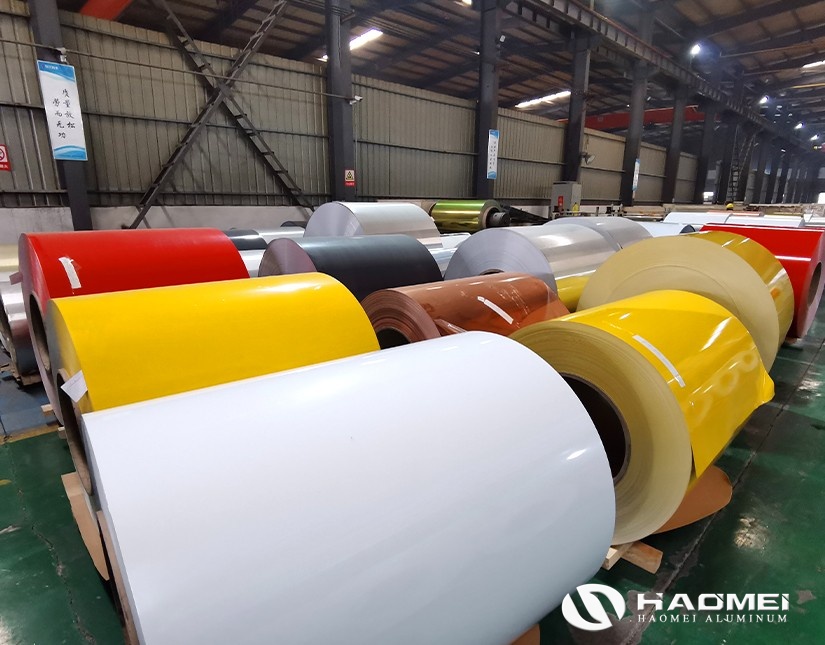
Powder-coated aluminum is widely used across construction and industrial fabrication. A few common matches:
Architectural cladding, fascia, soffit, trims: 3105 H24 / 3003 H14 with durable polyester.
Curtain wall frames, window/door profiles: 6063-T5 with architectural-grade powder.
Equipment housings, enclosures, HVAC panels: 3003/5052 depending on dent resistance and forming needs.
Transportation and trailers: 5052 H32 where higher strength and fatigue resistance matter.
Signage and display panels: 5005 or 3003 with color-stable powders.
For customers sourcing fabricated components or blanks, we also support Powder Coated Sheet Metal where the coating, alloy, and temper are aligned to your bend schedule and cosmetic requirements.
Buying tips I give customers who care about both price and performance
Define exposure (interior, exterior urban, coastal, industrial) before selecting powder chemistry.
Lock the alloy/temper to avoid "equivalent substitutions" that change forming and dent resistance.
Ask for film thickness range and cure verification (metal temperature monitoring is ideal).
Confirm protective packaging for high-gloss or dark colors where rub marks are costly.
Compare total delivered cost: coil/sheet utilization, scrap rate, and rework often outweigh a small per-ton difference.
What you should send for an accurate quotation
To quote powder coated aluminum correctly and keep surprises out of production, I recommend providing:
Alloy and temper (or forming requirements if you want us to recommend)
Thickness, width, length (or coil ID/OD), and tolerances
Powder type (standard polyester vs super-durable), color code, gloss, texture
Target film thickness and performance standard (if applicable)
Quantity, delivery terms, and required inspection/testing
When those inputs are clear, powder coated aluminum price becomes predictable, and the product you receive is far more likely to perform exactly as the project intends.
ABOUT US
PRODUCTS
APPLICATION
CONTACT US
Mobile: +86-18137889531 (same number on WeChat)
Phone: +86-371-65621391
Email: nydia@aluminumhm.com
No.14 Waihuan Road, CBD,
Zhengzhou, China


Copyright © 2026 Haomei Aluminum CO., LTD.