
nydia@aluminumhm.com

News
Haomei Aluminum CO., LTD.
Color Coated Aluminum Sheet Manufacturers
Color coated aluminum sheet manufacturers sit at the intersection of metallurgy, coil coating chemistry, and high-speed production control. Buyers often focus on color cards and price, but real performance is decided by what happens upstream: alloy selection, surface pretreatment, coating architecture, curing, and inspection discipline. From my day-to-day production perspective, a reliable supplier is the one that can repeat the same film build and gloss from batch to batch, not just ship "close enough" material.
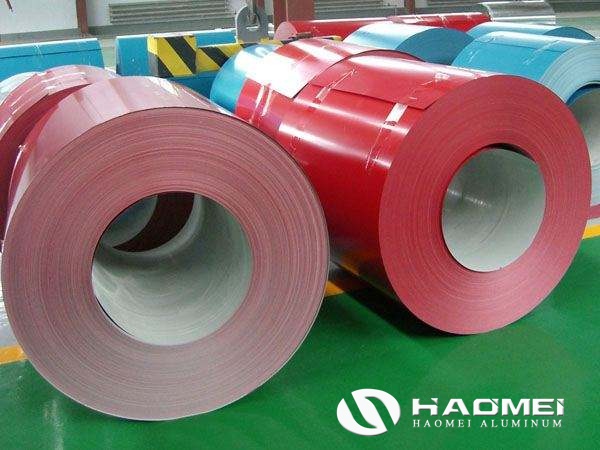
What color coated aluminum sheet actually is
Color coated aluminum sheet (also called prepainted or pre-coated aluminum) is produced by applying an organic coating to aluminum coil or sheet through a controlled coating line. After cleaning and chemical pretreatment, primer and topcoat are applied (single- or multi-layer), then cured in an oven to form a durable, adherent film. The sheet is then cut-to-length, slit, or supplied as coil depending on the application.
For product selection and typical configurations, many customers start with Color Coated Aluminium Sheet as a baseline, then adjust alloy, temper, coating, and film thickness to match forming and weathering requirements.
Main specifications buyers should verify
Manufacturers may quote similar "standard specs," but you will see big differences once you compare tolerances, coating systems, and test data. These are the core parameters that matter.
1) Substrate alloy and temper
Common alloys in architectural and general fabrication include 1xxx, 3xxx, and 5xxx series.
1060/1100: high purity, good corrosion resistance, excellent formability for light-duty panels and trims.
3003/3004/3105: balanced strength and formability; widely used for roofing, cladding, ceiling, and roller shutter slats.
5052: higher strength and better marine/corrosion performance; preferred when extra rigidity or aggressive environments are involved.
Tempers such as H14/H16/H24 control hardness and forming behavior. If your part needs deep forming, the wrong temper shows up immediately as micro-cracks at bend radius.
2) Thickness, width, and tolerances
Typical thickness ranges from 0.20 to 2.00 mm (some producers go thinner or thicker depending on line capability). Width commonly ranges up to 1,250 mm or more.
Key checks:
Thickness tolerance and crown control (stability in roll forming)
Flatness (waviness affects panel appearance)
Edge quality after slitting (burrs can trigger coating damage)
3) Coating system and film thickness
A professional quote should state coating type and film build (dry film thickness, DFT).
PE (Polyester): cost-effective, good color range, solid for interior or moderate exterior exposure.
PVDF (70% fluorocarbon): higher UV and chalking resistance, typically chosen for facade and long-life exterior.
SMP/HDPE (depending on manufacturer offering): improved hardness and weathering versus standard PE.
Typical film builds:
Topcoat: 15–25 μm (PVDF often 25 μm)
Primer: 5–10 μm
Back coat: 5–10 μm (service-side dependent)
4) Pretreatment and adhesion performance
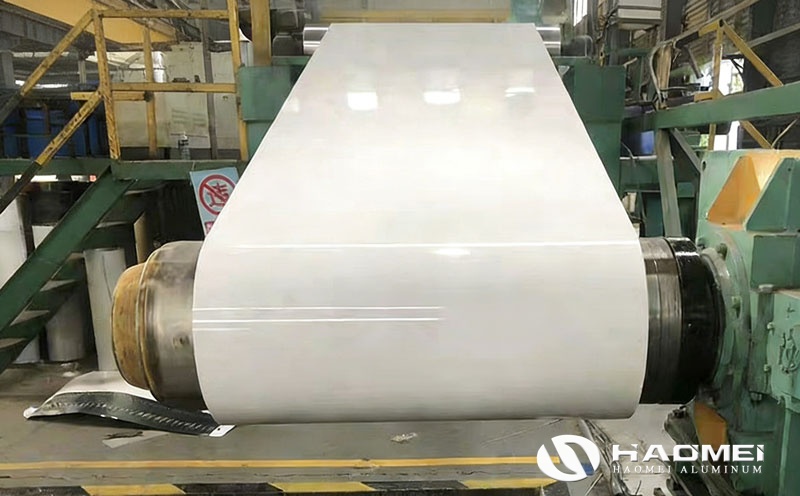
Pretreatment (chromate-free or chromate, depending on market and compliance) is the hidden foundation. If the pretreatment is unstable, you will see adhesion loss, blistering, or filiform corrosion even with a "good" paint brand.
Ask for test evidence:
Cross-hatch adhesion (dry and after boiling/water immersion)
T-bend (0T/1T/2T) without cracking
Impact resistance
MEK rub or solvent resistance (cure confirmation)
5) Color, gloss, and appearance control
Color coated aluminum is sold on looks, so color stability is critical:
Color: ΔE control between coils and across coil head/tail
Gloss: consistent gloss units (GU) and haze
Surface: pinholes, dirt specks, roller marks
A mature manufacturer will run online thickness monitoring, strict viscosity/temperature control, and disciplined roll management. On busy export programs, that process control is what keeps your jobsite panels from looking like they came from different batches.
Features and advantages that drive adoption
Lightweight with strength where it counts
Aluminum's low density reduces load on structures and makes handling easier. With the right alloy/temper, you can achieve stiffness without overbuilding.
Corrosion resistance plus a functional barrier layer
The coating system adds a barrier against moisture, salts, and pollutants, while the aluminum substrate naturally resists corrosion. In many environments, this combination outperforms painted steel in long-term appearance retention per unit weight.
High productivity in fabrication
Pre-coated sheet shortens your process route: no post-painting, fewer VOC-related steps, and better surface consistency. This matters for roll forming, sandwich panels, and modular building components.
Design flexibility
Manufacturers can provide solid colors, metallics, wood grain, stone patterns, and matte finishes. For brand-driven architecture or consumer products, repeatability is the real value.
Where color coated aluminum sheet performs best
Building envelope and architectural applications
Roof and wall cladding
Fascia, soffits, gutters
Composite panel skins
For long-life exterior facades, PVDF is often selected to control chalking and fading in high-UV regions.
Transportation and equipment panels
Truck bodies, trailers (non-structural skins)
Enclosures and equipment covers
Interior and decorative systems
Ceiling systems
Partition panels
Appliance and furniture panels
Signage and display
Flatness and color consistency make it a strong choice for signage substrates and display panels.
How to evaluate color coated aluminum sheet manufacturers (practical checklist)
From the production floor, I look for proof of control, not just a catalog.
Traceability: coil ID tracking from substrate to finished package.
Coating line capability: stable line speed, oven temperature profiling, and film thickness measurement.
Consistent QC standards: adhesion, T-bend, impact, gloss, color, and corrosion tests with clear acceptance criteria.
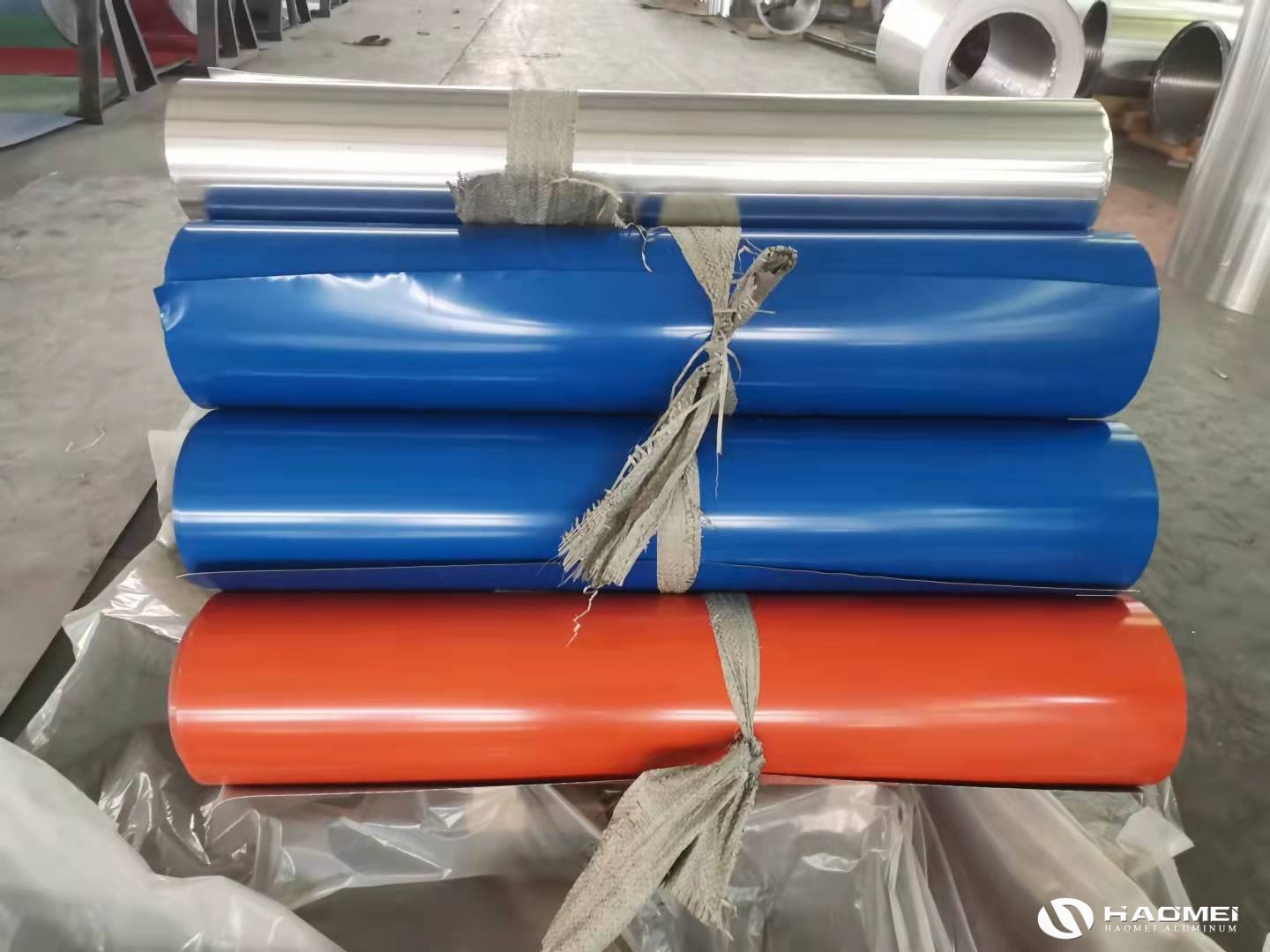
Export packaging discipline: edge protectors, moisture barriers, desiccants when needed, and anti-abrasion measures.
Technical support: a manufacturer who can recommend alloy/temper and coating system based on your forming radius, end-use, and climate.
When customers need coil supply for continuous roll forming or high-volume fabrication, selecting Color Coated Aluminum Coil alongside sheet options can reduce conversion cost and improve yield, provided the coating and mechanical properties are matched to the forming process.
Industry insight: where failures usually start
Most disputes in export shipments come from three avoidable gaps:
Mismatch between forming requirement and temper/T-bend performance (cracking at bends, especially in cold weather).
Under-specified coating system (PE used where PVDF-level weathering is expected).
Inconsistent appearance control (ΔE drift, gloss variation, or roller marks that only show after installation).
The best manufacturers treat color coated aluminum as an engineered system, not a commodity. When alloy, pretreatment, coating chemistry, and process control are aligned, you get a material that fabricates cleanly, installs beautifully, and stays stable in the field for years.
ABOUT US
PRODUCTS
APPLICATION
CONTACT US
Mobile: +86-18137889531 (same number on WeChat)
Phone: +86-371-65621391
Email: nydia@aluminumhm.com
No.14 Waihuan Road, CBD,
Zhengzhou, China


Copyright © 2026 Haomei Aluminum CO., LTD.