
nydia@aluminumhm.com

News
Haomei Aluminum CO., LTD.
Color Coated Aluminum Coil Manufacturer
Color coated aluminum coil (also called prepainted aluminum coil) is not simply aluminum with paint. It is an engineered composite: an aluminum substrate matched with a pretreatment and multi-layer coating system, cured under controlled conditions to deliver stable color, corrosion resistance, and formability. From a manufacturers perspective, what customers ultimately buy is not only a color, but also a predictable performance windowcoil after coil, batch after batch.
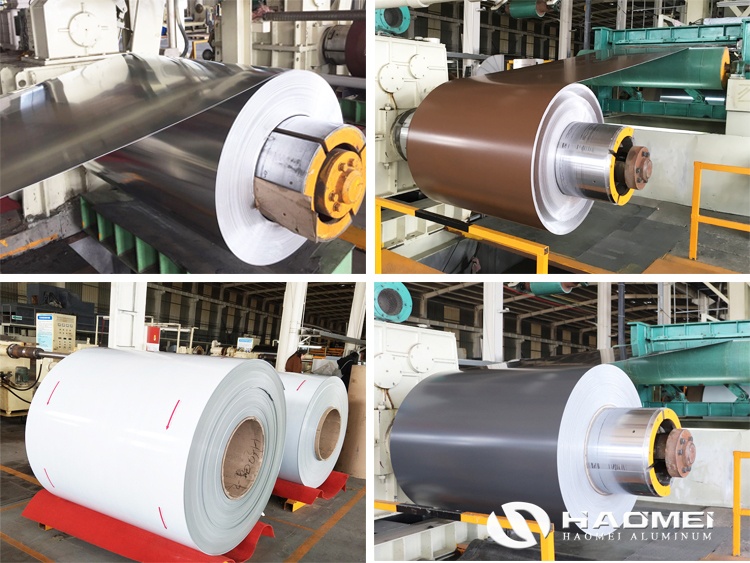
Main specifications that define a qualified product
1) Alloy and temper (substrate selection)
Common alloys for color coated aluminum include 1xxx, 3xxx, and 5xxx series, selected by end-use and forming demand.
AA1050/1100 (1xxx): high purity, excellent formability; used where deep forming is needed but strength requirements are moderate.
AA3003/3004 (3xxx): balanced strength and corrosion resistance; widely used for roofing, cladding, and general building envelope.
AA5052 (5xxx): higher strength and superior marine/industrial corrosion resistance; suitable for harsh environments and premium applications.
Temper typically ranges from O/H14/H24/H32, depending on bending radius and stiffness requirements. In production, the temper choice influences coil set, flatness after slitting, and post-forming appearance (especially gloss uniformity).
2) Coil dimensions and tolerances
A professional manufacturer must control thickness, width, coil ID/OD, and edge quality.
Thickness (typical): 0.201.50 mm for most architectural and general industrial uses.
Width: often 6001500 mm depending on line capability and customer processing.
Coil ID: 405/505 mm are common.
Tolerance control: stable thickness and consistent coating build are crucial for roll-forming and for avoiding color shade deviation due to film thickness variations.
3) Coating system and paint type
The coating is where performance is designed. The most common systems are:
PE (Polyester): cost-effective for interior and moderate exterior use.
SMP (Silicone Modified Polyester): improved weatherability and hardness.
PVDF (Fluorocarbon, e.g., 70% PVDF): excellent long-term color retention and UV resistance; preferred for architectural facades.
PU (Polyurethane): strong chemical resistance and durability for certain industrial uses.
A typical structure is primer + topcoat on the front side, and a service coat/back coat on the reverse. Manufacturers specify coating thickness by microns; architectural products often target a stable topcoat range (e.g., ~1825 m depending on system), with primer thickness adjusted to support adhesion and corrosion resistance.
4) Surface finish, gloss, and texture
Specifications often include gloss level, color standard (RAL/Pantone/custom), and surface effect (smooth, matte, embossed, woodgrain, stone pattern). From line experience, textured finishes can hide minor substrate imperfections better, but they require tighter viscosity and curing control to avoid orange peel variation.
5) Performance tests buyers should care about
A manufacturers technical datasheet should be backed by routine testing such as:
Adhesion (cross-hatch / T-bend)
Impact resistance
Pencil hardness
MEK rub / solvent resistance
Salt spray and humidity resistance
Color difference (E) and gloss retention
In my experience on coating lines, the most telling real-world indicator is not one single test, but consistency: stable pretreatment chemistry, stable oven temperature profile, and stable line speed.
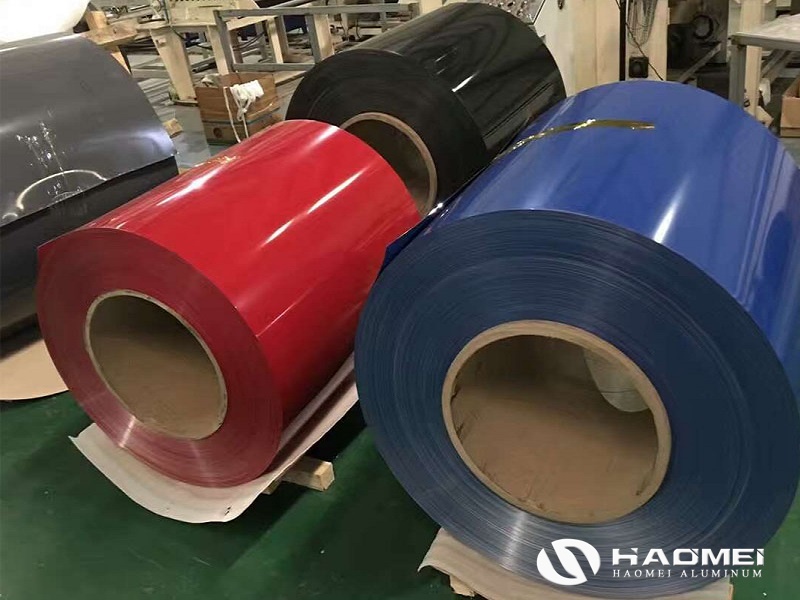
Key features and advantages of color coated aluminum coil
Lightweight with strong corrosion performance
Aluminums low density helps reduce structural load and shipping cost, a big advantage for export projects. When combined with proper pretreatment and a suitable coating system, it performs reliably in coastal, humid, or industrial atmospheres.
Excellent formability for roll-forming and stamping
When the alloy/temper and coating flexibility are correctly matched, coated coils can be bent, roll-formed, and stamped with minimal risk of cracking. Manufacturers typically guide customers on minimum bend radius and T-bend capability based on the coating type.
Stable appearance and high design freedom
Coil coating delivers uniform color and film build at scale, enabling consistent appearance across large faade areas. Compared with post-painting, factory coating reduces on-site variability and simplifies project management.
Process efficiency and cost control
Coil-to-coil production supports large volumes and repeatability. For downstream processors, it reduces painting steps, VOC management on site, and rework riskespecially important when production schedules are tight.
Where color coated aluminum coil is most applicable
Architectural envelope: roofing, cladding, fascia, ceilings
For building systems, the typical decision is PE/SMP for standard projects and PVDF for long-term exterior exposure. In export orders, we often recommend PVDF when the project is near the sea, at high altitude, or requires long warranty expectations.
Rainwater systems and formed profiles
Gutters, downspouts, and trim parts benefit from aluminums corrosion resistance and the coils formability. Edge protection, proper back coating, and careful slitting help prevent edge corrosion initiation during service.
Transportation, container, and equipment panels
For truck bodies, refrigerated panels, and equipment housings, buyers may prioritize impact resistance, chemical resistance, and scratch resistance. PU or reinforced polyester systems can be appropriate depending on operating conditions.
Signage, insulation jacketing, and general fabrication
When flatness, color stability, and easy fabrication are required, coated coils are efficient. For customers who need cut-to-length sheets rather than coils, we typically supply conversion options.
For product selection and more detailed options, you can view our Color Coated Aluminum Coil range, or explore the broader category of color coated aluminum solutions for different coatings and applications.
Manufacturer insights: what separates a reliable supplier
From a production technicians viewpoint, consistent quality comes from controlling a few critical points:
Pretreatment discipline: cleaning efficiency and conversion coating weight directly impact adhesion and corrosion resistance.
Oven curing profile: under-cure leads to weak solvent resistance; over-cure can reduce flexibility and affect gloss.
Coating thickness control: stable film build improves color uniformity and weathering performance.
Packaging and handling: export coils must be protected against moisture ingress, edge damage, and transit vibration. Many quality issues actually originate from poor storage and container humidity rather than the paint itself.
When choosing a color coated aluminum coil manufacturer, buyers should look for transparent specifications, documented test routines, and a team that can discuss alloy/temper and coating system selection based on the actual forming process and exposure environmentnot just a color card. That technical alignment upfront is what keeps the coil performing well after it becomes a roof panel, a faade cassette, or a formed profile in the field.
ABOUT US
PRODUCTS
APPLICATION
CONTACT US
Mobile: +86-18137889531 (same number on WeChat)
Phone: +86-371-65621391
Email: nydia@aluminumhm.com
No.14 Waihuan Road, CBD,
Zhengzhou, China


Copyright © 2026 Haomei Aluminum CO., LTD.