
nydia@aluminumhm.com

News
Haomei Aluminum CO., LTD.
China Prepainted Aluminum Coil
China prepainted aluminum coil is a continuous-coil coated product engineered for stable color, corrosion resistance, and efficient fabrication. In export projects, it is often chosen not only for its cost-performance ratio, but for its controllable specifications: alloy and temper selection, coating system matching, and repeatable color gloss control. From a production technician's view, the real value is consistency across batches, because that is what keeps your roll-forming line stable and your installed facade looking uniform.
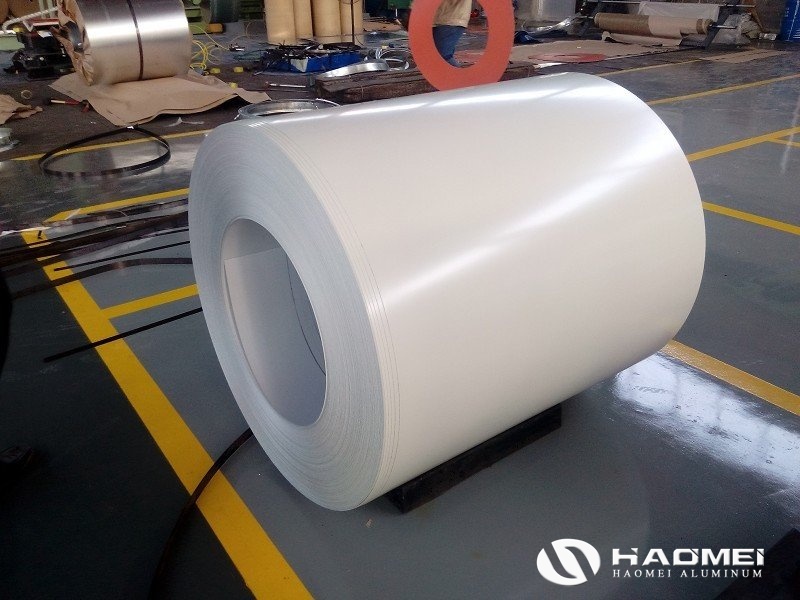
What exactly is a prepainted aluminum coil?
A prepainted (color coated) aluminum coil is produced by cleaning and chemical pretreating an aluminum strip, applying primer and topcoat (and often a back coat), then curing in an oven. The coil-coating process creates a uniform film thickness and strong adhesion, which is difficult to achieve with post-painting after fabrication.
If you are comparing product categories on our site, Pre Painted Aluminium Coil is the closest match to most construction and industrial coil-coating requirements.
Main specifications buyers should lock down
In my experience, quality disputes usually come from incomplete specifications rather than poor manufacturing. For China prepainted aluminum coil, these are the parameters that should be clearly defined in the purchase order.
1) Substrate alloy and temper
Common coil-coating alloys include:
AA3003 (H14/H24): good formability and corrosion resistance, widely used for roofing, cladding, insulation jacketing.
AA3105 (H14/H24): popular for building envelope and roll-formed profiles.
AA5052 (H32/H34): higher strength and better marine performance, often used for demanding environments.
Temper influences bending and roll forming behavior. If the profile has tight radii, H24 may outperform H14. Always specify minimum inside bend radius expectations.
2) Thickness, width, and tolerance
Typical ranges:
Total thickness: 0.20 to 1.50 mm (commonly 0.30-0.80 mm for roofing and cladding)
Width: 600 to 1600 mm (depending on coating line and slitting capability)
Coil ID: usually 508 mm or 610 mm
Tolerances matter on high-speed lines. A stable thickness tolerance reduces roll-forming adjustment time and helps control oil-canning on wide panels.
3) Coating system and dry film thickness (DFT)
Coating selection should match exposure and service life goals:
PE (polyester): economical, good for interior and light exterior duty. Typical topcoat 15-20 μm, primer 5-7 μm.
SMP (silicone modified polyester): improved weathering vs PE, often used for roofing.
PVDF (70%): premium outdoor durability and color retention. Typical topcoat 25-30 μm.
Back coat is often 5-10 μm depending on whether it is a service back (visible) or a technical back (for adhesion and protection). For aggressive environments, specify a more robust primer and confirm edge protection requirements.
4) Color, gloss, and surface finish
Color standards: RAL, Pantone, or customer sample matching
Gloss: matte, semi-gloss, high gloss; define gloss at 60 degrees
Finish: smooth, embossed, brushed, wrinkle
For project continuity, require batch-to-batch color delta control (commonly expressed as Delta E). It is worth agreeing on measurement method and acceptance criteria up front.
5) Performance standards and tests
A technically sound supplier will support:
Adhesion: T-bend, cross-hatch
Impact resistance and pencil hardness
Solvent resistance (MEK rub)
Salt spray and humidity testing
Chalk resistance and QUV weathering for exterior systems
These tests connect directly to real issues: peeling at bends, fading on sun-facing elevations, or filiform corrosion creeping under the coating.
Key features that make China prepainted aluminum coil competitive
Stable coil-coating process control
A mature coil line controls pretreatment chemistry, oven cure curve, and coating viscosity. When these are stable, you get consistent DFT, adhesion, and gloss, which means fewer surprises during profiling and fewer rejections at incoming inspection.
Lightweight with corrosion resistance
Aluminum's natural oxide layer plus a qualified pretreatment and coating system gives strong corrosion resistance at low weight. That is why prepainted aluminum is common in long-span roofing, transportation, and coastal architectural details when the correct alloy and coating are chosen.
Fabrication-friendly
Prepainted coil is designed for roll forming, stamping, and bending. The right temper and coating flexibility (supported by T-bend results) reduce micro-cracking at tight bends, which is a common failure trigger in outdoor exposure.
Packaging and logistics suited for export
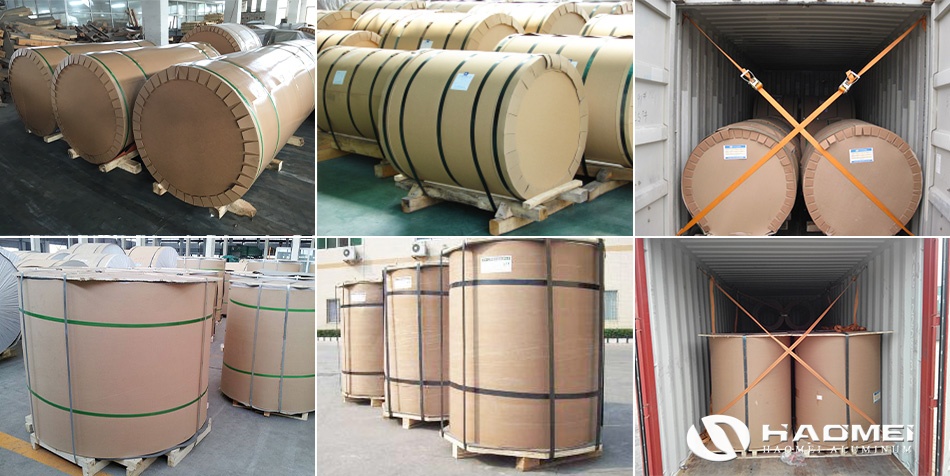
Export coils should be protected against transit moisture and abrasion. A professional pack typically includes eye-to-wall or eye-to-sky options, edge protectors, moisture barrier, and clear labeling for traceability.
Advantages that buyers notice on the production floor
From an operational viewpoint, the advantages show up as measurable improvements:
Higher line efficiency: consistent thickness and coating reduce setup time.
Lower scrap rate: better bend performance and fewer coating defects.
Easier QC acceptance: clear standards for DFT, color, and adhesion.
Longer service life in the field: especially with PVDF systems and proper pretreatment.
When customers need both coil and cut-to-length formats, Painted Aluminum Sheets can be specified to match the same coating system, color, and gloss for mixed fabrication workflows.
Best-fit application scenarios
China prepainted aluminum coil performs well in scenarios where lightweight, appearance, and corrosion resistance are critical:
Building envelope
Roofing panels, wall cladding, soffits, fascia, ceiling systems, and composite panel skins. PVDF is typically preferred for premium facades and strong UV exposure.
Rainwater systems and accessories
Gutters, downspouts, trim coils, flashing. Here, forming performance and edge corrosion control are important.
Appliances and general industry
Decorative panels, housings, and insulation jacketing. PE and SMP are common depending on heat and abrasion needs.
Transportation and signage
Body panels, interior trims, and sign substrates where flatness, color consistency, and durability matter.
Practical purchasing tips from industry experience
Match coating system to climate: PVDF for coastal/high UV; SMP for many roofing projects; PE for indoor or budget exterior.
Specify DFT and testing rather than just "PVDF/PE," because film build and cure quality drive performance.
Confirm forming requirements (minimum bend radius, T-bend target) before production.
Require traceability: coil number, batch, coating lot, and inspection records.
Selecting the right China prepainted aluminum coil is less about chasing the lowest price and more about controlling the technical variables that affect your fabrication yield and the project's long-term appearance.
ABOUT US
PRODUCTS
APPLICATION
CONTACT US
Mobile: +86-18137889531 (same number on WeChat)
Phone: +86-371-65621391
Email: nydia@aluminumhm.com
No.14 Waihuan Road, CBD,
Zhengzhou, China


Copyright © 2026 Haomei Aluminum CO., LTD.