
nydia@aluminumhm.com

News
Haomei Aluminum CO., LTD.
Aluminum Gutter Coil Wholesale
Aluminum gutter coil is one of those products that looks simple—“painted coil that becomes gutters”—until you start buying it at wholesale scale and living with the consequences of alloy choice, temper, coating system, and slit tolerance across multiple seasons. In my experience, the most successful wholesale programs treat gutter coil as an engineered exterior building material, not a commodity coil with color.
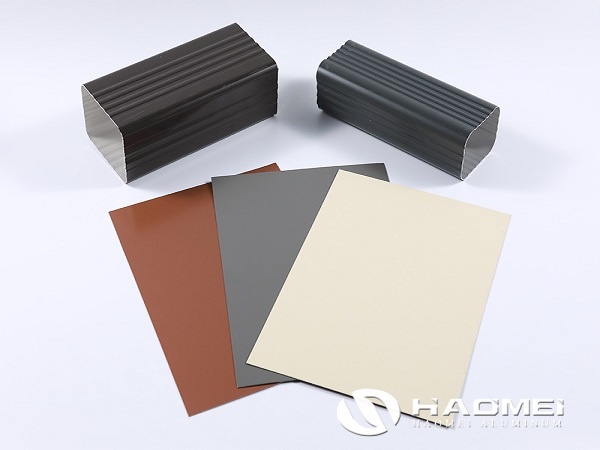
At its core, gutter coil is prefinished aluminum sheet supplied in coils, typically slit to widths used for roll-forming or brake-forming into gutters, downspouts, fascia covers, drip edge, and trim. The coil has to do three things well at the same time:
Form cleanly without cracking at hems, corners, or bead rolls
Hold shape (oil canning control and adequate stiffness)
Survive outdoors (UV, wet/dry cycling, salt, pollution, and contact with fasteners)
Wholesale buyers usually win or lose on consistency: consistent paint adhesion, consistent color/gloss, consistent mechanical behavior, and consistent edge quality after slitting.
Common Alloys for Aluminum Gutter Coil
Most gutter coil in North America is based on 3xxx-series (manganese-bearing) alloys, with 3003 leading for its balance of formability and corrosion resistance. Some mills and converters also supply 3105, which has become common in painted building products.
Alloy Selection: What I See in Real Orders
| Alloy | Typical Use in Gutter Coil | Why Buyers Choose It | Notes from the field |
|---|---|---|---|
| 3003 | Premium gutter and fascia coil | Excellent formability, good corrosion resistance, stable processing | Reliable for tight hems and hand-brake work; tends to reduce split/corner cracking complaints. |
| 3105 | High-volume painted trim coil, gutters | Good formability, often competitive cost, widely available | Coating performance is more about paint system than alloy here; confirm mechanical targets by temper. |
| 5052 (less common) | Specialty applications needing higher strength | Higher strength and fatigue resistance | Forms differently; if operators are used to 3003/3105, you can see increased springback and setup time. |
For wholesale gutter coil, I typically prioritize 3003 or 3105 unless a project has a special requirement (heavy wind loads, unusual forming geometry, or compatibility constraints).
Tempers: The Practical Difference Between “Forms Easy” and “Stays Straight”
Temper is where many purchasing specs look “close enough” on paper, yet behave very differently on the shop floor.
H14 / H24 (strain-hardened, partially annealed): A common sweet spot for painted building products. Balances stiffness and formability.
H16 / H18: Stiffer, higher strength, but less forgiving in tight bends and hems.
O (annealed): Extremely formable, but usually too soft for coil handling and dent resistance in gutter applications.
In wholesale distribution, I’ve seen more returns and installer complaints tied to temper mismatch than to nominal thickness. If a contractor expects a coil that hems smoothly and gets a stiffer temper, you’ll hear about edge micro-cracking or “white lines” at bends—sometimes purely coating stress, sometimes substrate/temper-related.
Typical Specification Ranges (Market-Common)
Thickness: often 0.019"–0.027" (varies by region and product line)
Widths: common slit widths for gutter/trim profiles (varies with forming equipment)
Coating: polyester, SMP, or PVDF depending on performance tier
Key Properties That Matter (Beyond a Datasheet)
1) Formability and Bend Performance
Gutter coil must tolerate multiple forming steps: bead rolls, hems, corners, miters, and sometimes aggressive brake bends for fascia. With 3003/3105 in appropriate tempers, you can typically achieve clean bends without excessive springback.
My practical note: when you see cracking at hems, don’t blame “bad aluminum” immediately. Confirm temper, confirm paint system flexibility, and confirm that the slitter didn’t introduce edge damage that becomes a crack starter.
2) Corrosion Resistance
Aluminum’s natural oxide layer provides baseline protection, while the coating system provides the real exterior durability. In coastal or industrial zones, performance differences show up fast—especially at cut edges, scratches, and fastener contact points.
Key real-world factors:
Salt spray exposure (coastal)
Runoff chemistry (roofing material runoff can be aggressive)
Fastener compatibility (avoid galvanic couples)
3) Coating Adhesion, UV Resistance, and Color Stability
Wholesale buyers should treat coating selection as a product tier decision:
Polyester: economical, good for many residential uses, moderate UV resistance
SMP (silicone-modified polyester): better chalk/fade performance than standard polyester, common mid-tier
PVDF (e.g., 70% Kynar-type systems): highest UV stability and long-term color retention, premium architectural tier
Personal insight: if you sell into markets where homeowners notice fade, upselling SMP or PVDF reduces reputation risk more than it increases cost—especially on darker colors. Dark browns, blacks, and deep greens amplify chalk/fade complaints.
4) Dent Resistance and “Oil Canning” Control
Gutters are long, visible lines on a façade. The coil must resist waviness and denting during handling and installation. Stiffer tempers help, but you can’t over-harden without sacrificing bend quality.
I usually recommend tuning performance through a combination of:
appropriate temper selection,
consistent thickness,
and good forming practices (proper roller setup, controlled tension, clean tooling).
Advantages of Aluminum Gutter Coil in Wholesale Programs
High throughput and low scrap: Coil-based forming is efficient, and aluminum’s consistent behavior (when specified correctly) keeps yield high.
Corrosion performance: Especially compared with bare ferrous options, aluminum offers dependable durability with less maintenance.
Finish versatility: Color matching, gloss options, and textured finishes support retail programs and builder packages.
Lightweight logistics: Easier handling than many alternatives; freight efficiency improves with stable packaging and coil IDs.
Recyclability: Aluminum has strong recycling economics; end-of-life value and sustainability messaging matter increasingly in bids.
Applications: Where Each Specification Wins
Aluminum gutter coil is used for more than gutters. A strong wholesale assortment typically supports several exterior envelope applications:
K-style and half-round gutters (roll-formed)
Downspouts and elbows (formed sections)
Fascia and soffit trim (brake-formed wraps)
Drip edge, rake trim, and flashing (detail work)
Decorative banding and architectural accents (where color consistency matters)
Matching Spec to Application (Practical Guide)
| Application | Preferred Focus | What to Watch |
|---|---|---|
| Standard residential gutters | Formability + coating durability | Color consistency across lots; coil camber and slit edge quality. |
| Fascia wrap / brake work | Highest formability | Coating flexibility to avoid bend whitening; choose forgiving temper. |
| Coastal installations | Corrosion + premium coating | PVDF or higher-grade SMP; fastener compatibility and edge protection. |
| Dark colors / high-UV zones | Fade/chalk resistance | PVDF or proven SMP; enforce ΔE and gloss tolerance limits in purchase specs. |
What I Look for When Buying Aluminum Gutter Coil Wholesale
At wholesale scale, quality is largely controlled by upstream discipline. My short checklist:
Mill test certificates that match alloy/temper and mechanical targets
Coating system documentation (primer/topcoat type, dry film thickness targets)
Color control standards (ΔE tolerance, gloss range, lot traceability)
Slit quality (minimal edge burr, controlled edge wave, protective film if required)
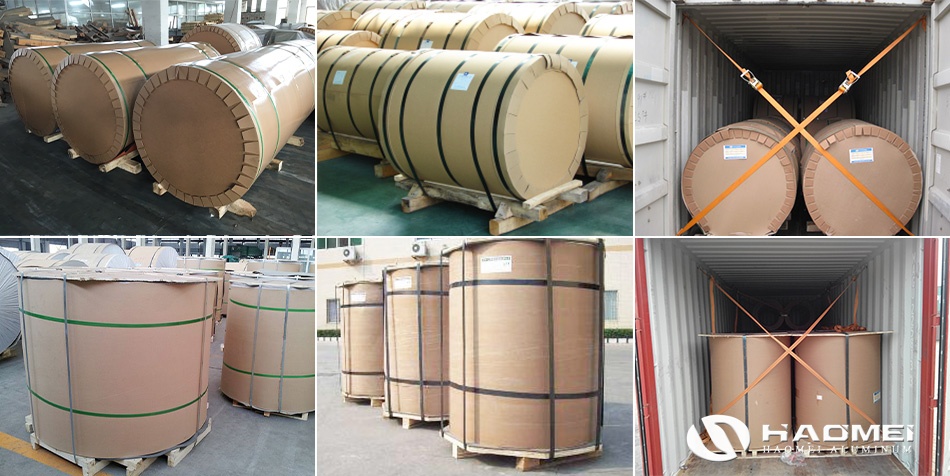
Packaging integrity (no telescoping, proper wrap, edge protectors, moisture control)
Market Perspective: Why Specifications Matter More When Prices Move
When aluminum premiums and coating inputs swing, the temptation is to treat gutter coil as interchangeable. In reality, tight wholesale margins get destroyed by one bad batch: installer callbacks, rejected colors, cracked hems, or excessive oil canning can outweigh any per-pound savings. The best buying strategies I’ve seen pair a competitive cost position with disciplined specs, stable supplier relationships, and clear performance tiers (good/better/best) tied to alloy/temper and coating system.
If you want, I can tailor a recommended specification sheet (alloy/temper/thickness/coating/warranty) based on your target market (coastal vs inland, residential vs light commercial), your forming process (roll-forming vs brake-forming), and your preferred color assortment.
ABOUT US
PRODUCTS
APPLICATION
CONTACT US
Mobile: +86-18137889531 (same number on WeChat)
Phone: +86-371-65621391
Email: nydia@aluminumhm.com
No.14 Waihuan Road, CBD,
Zhengzhou, China


Copyright © 2026 Haomei Aluminum CO., LTD.