
nydia@aluminumhm.com

News
Haomei Aluminum CO., LTD.
14 Trim Coil
In the building materials market, 14 trim coil usually refers to aluminum trim coil with a nominal thickness of 0.014 in. It is a lightweight, economical coil stock used for bending, wrapping, and covering exterior architectural details. I often describe it to customers as the practical choice for projects where easy forming, clean appearance, and cost control matter more than heavy-gauge impact resistance.
For contractors, distributors, and building product buyers, 14 trim coil occupies an important position between decorative flexibility and budget efficiency. It is commonly supplied in painted aluminum coil form, slit to practical widths, and packaged in rolls for jobsite fabrication. When selected correctly, it can improve installation speed, reduce maintenance, and provide a neat finished look around windows, fascia, doors, posts, and other exterior trim areas.
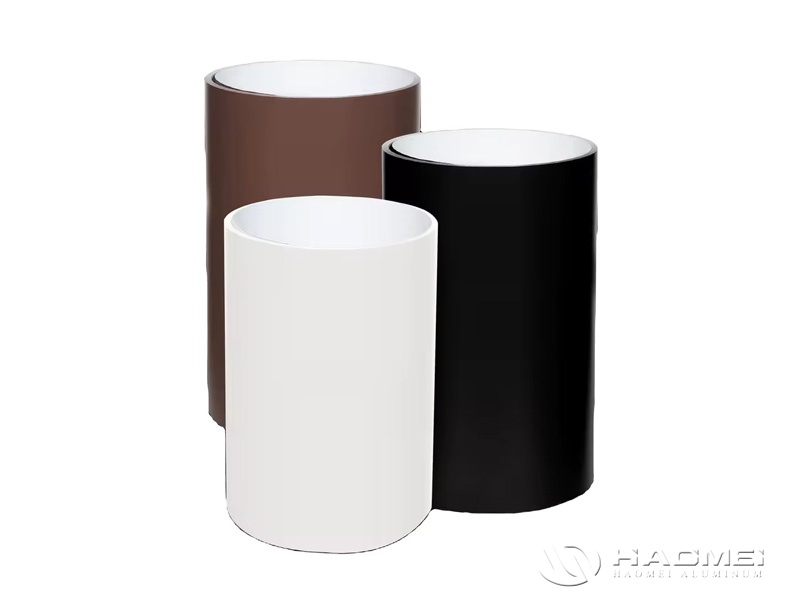
What Is 14 Trim Coil?
14 trim coil is aluminum trim coil stock made for bending on a brake and forming into custom trim profiles. The number 14 normally indicates the approximate thickness, 0.014 in, though buyers should always confirm the actual tolerance with the supplier. In my experience, thickness tolerance, paint quality, alloy selection, and coil flatness are more important than simply reading the nominal gauge.
Compared with heavier products such as 024 trim coil, 14 trim coil is easier to cut and form. It is often chosen for residential renovation, light-duty exterior wrapping, mobile home trim, decorative edging, and areas where severe mechanical stress is not expected.
Common Alloys for 14 Trim Coil
The most widely used aluminum alloys for 14 trim coil are from the 3000 and 5000 series. Each alloy offers a different balance of formability, corrosion resistance, strength, and coating performance.
| Alloy | Main Characteristics | Typical Use in Trim Coil |
|---|---|---|
| 3003 | Good corrosion resistance, excellent formability, stable quality | General exterior trim, fascia, window and door wrapping |
| 3105 | Better strength than 3003, good paint adhesion, widely used in building products | Painted trim coil, siding accessories, soffit and fascia components |
| 3004 | Higher strength, good forming performance | Applications needing slightly better rigidity |
| 5052 | Excellent corrosion resistance and higher strength | Coastal or more demanding environments, specialty trim work |
For most painted 14 trim coil products, 3105 is a very practical choice. It has enough strength for daily exterior use while still bending smoothly on common shop or jobsite equipment. 3003 is also popular when excellent formability is the priority. If the project is near the ocean or in a more corrosive environment, I prefer to discuss 5052 or an upgraded coating system rather than relying on thickness alone.
Tempers: Soft Enough to Form, Stable Enough to Install
Temper is one of the details that separates a reliable coil from a difficult one. For 14 trim coil, common tempers include H14, H24, and sometimes H16 or H26 depending on the alloy and production route.
| Temper | Performance Profile | Practical Comment |
|---|---|---|
| H14 | Half-hard, very workable | Easy bending, suitable for standard trim profiles |
| H24 | Strain-hardened and partially annealed | Stable, consistent, good for painted coil stock |
| H16 | Slightly harder than H14 | Better shape retention, less forgiving during tight bends |
| H26 | Harder, partially annealed | Used when more rigidity is needed |
For standard exterior trim fabrication, H14 or H24 is usually the most comfortable range. A coil that is too soft may oil-can or deform during handling. A coil that is too hard can crack at tight bends, especially if the paint film is not flexible enough. From a production and customer service perspective, I always recommend testing the bend radius before bulk installation, particularly in cold weather.
Key Properties of 14 Trim Coil
The value of 14 trim coil comes from the combined performance of aluminum substrate and surface coating. A good product should not only look clean when new, but also retain color, resist corrosion, and remain workable during fabrication.
Important properties include:
Light weight: Easy to transport, carry, cut, and bend on site.
Good corrosion resistance: Aluminum naturally forms a protective oxide layer.
Excellent formability: Suitable for brake forming into custom shapes.
Paint compatibility: 3003 and 3105 substrates accept polyester, PVC, or other coating systems well.
Weather resistance: Properly coated trim coil resists rain, sunlight, and seasonal temperature changes.
Low maintenance: No regular repainting is required under normal service conditions.
When customers ask me how to judge quality quickly, I usually suggest checking three things: coating uniformity, edge condition, and coil tension. A beautiful surface is important, but poor winding or rough slit edges can cause waste during fabrication.
Surface Finishes and Coating Options
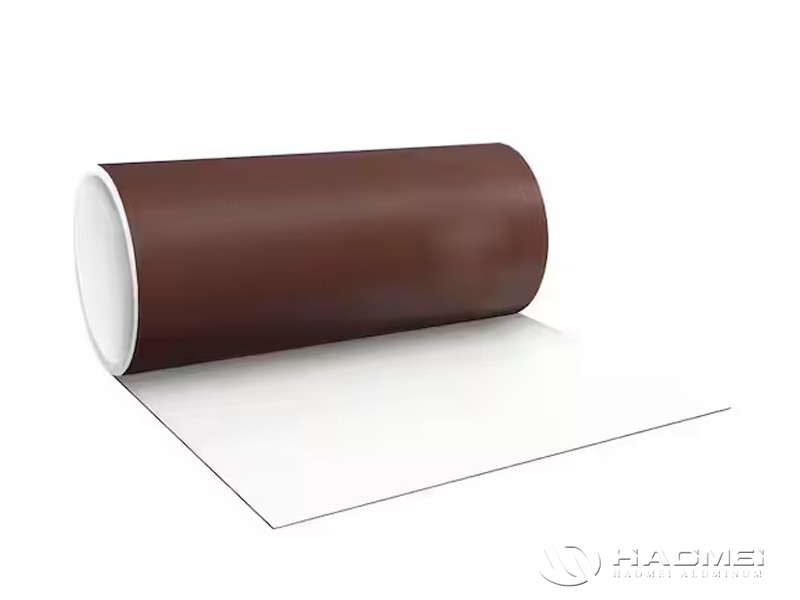
14 trim coil is commonly supplied in smooth painted finishes, textured finishes, PVC-coated finishes, and wood grain decorative finishes. The coating choice should match the project environment and visual target.
Polyester coatings are widely used because they offer good color options and cost efficiency. PVC-coated trim coil provides additional film thickness and surface protection, often preferred for bending operations and exterior trim that needs a more durable surface. Textured coatings help hide small handling marks and can create a more architectural appearance.
Color selection is also part of product performance. White, brown, black, bronze, clay, sandstone, gray, green, blue, and red are all common market colors. Dark colors absorb more heat, so coating quality and paint flexibility become especially important. For black or dark bronze coil, I pay close attention to color stability, film adhesion, and whether the coating system is suitable for long-term outdoor exposure.
Advantages of Using 14 Trim Coil
The biggest advantage of 14 trim coil is efficiency. It allows installers to fabricate custom trim on demand instead of stocking many preformed profiles. This reduces inventory pressure and makes jobsite adjustment easier.
Main advantages include:
Cost-effective material choice14 trim coil uses less aluminum than heavier gauges, helping reduce material cost where high structural strength is not required.
Fast fabricationInstallers can cut, bend, and wrap trim details quickly using a portable brake.
Clean exterior appearancePainted trim coil covers aged wood, protects exposed areas, and improves the overall look of a building.
Reduced maintenanceAluminum does not rust like steel, and painted surfaces reduce the need for frequent repainting.
Flexible design matchingMultiple colors and finishes make it easier to match siding, roofing, windows, gutters, and doors.
Good supply convenienceCommon roll sizes and widths are easy for distributors to stock and contractors to handle.
For buyers who need a broader product range, aluminum trim coil options can be selected by thickness, width, alloy, temper, coating, color, and packaging style.
Typical Applications
14 trim coil is best used in light-duty and decorative exterior trim applications. It performs well when properly installed and not exposed to repeated impact or heavy mechanical load.
Common applications include:
Window and door trim wrapping
Fascia and rake board covering
Garage door trim
Porch post wrapping
Mobile home skirting and trim details
Drip edge and flashing-style light trim
Siding accessory fabrication
Decorative exterior repair work
Small commercial facade details
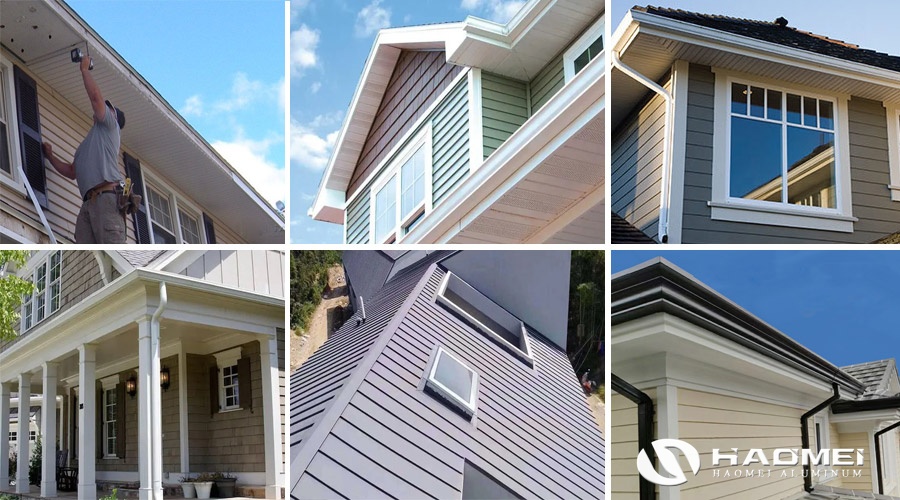
For window and door wrapping, the ease of bending is a major advantage. For fascia applications, I usually advise customers to evaluate wind exposure, profile design, and support conditions. A thin coil can perform well when fully supported, but it should not be treated as a structural panel.
Buying Considerations From Industry Experience
Price is always important, especially in the aluminum market where raw material cost can move quickly. Still, the lowest price is not always the lowest total cost. Thin trim coil is sensitive to surface scratches, coating defects, telescoping rolls, and edge burrs. Any of these issues can increase scrap rate on site.
Before purchasing, I recommend confirming:
Actual thickness and tolerance
Alloy and temper certificate
Paint type and coating thickness
Color standard or sample approval
Roll width, length, and inner diameter
Packaging strength for transportation
Minimum bend performance
Outdoor warranty expectations
Packaging deserves attention. A 0.014 in coil is light, but it still needs firm roll protection. Moisture, loose winding, crushed edges, and rough handling can damage the coil before it reaches the jobsite. Good packaging is not just cosmetic; it protects yield.
Practical Selection Guidance
Choose 14 trim coil when the project requires economical coverage, smooth forming, and decorative weather protection. Choose a heavier gauge if the trim will face impact, wide unsupported spans, or more demanding exposure. If the project is coastal, industrial, or high-end architectural work, consider upgraded alloy and coating combinations.
From my perspective, the best 14 trim coil is not defined by thickness alone. It is a balanced product: suitable alloy, reliable temper, consistent coating, accurate slitting, stable color, and packaging that keeps the roll usable until the last foot. When these factors are controlled, 14 trim coil becomes a dependable material for contractors, remodelers, distributors, and building product manufacturers who want attractive results with practical cost performance.
ABOUT US
PRODUCTS
APPLICATION
CONTACT US
Mobile: +86-18137889531 (same number on WeChat)
Phone: +86-371-65621391
Email: nydia@aluminumhm.com
No.14 Waihuan Road, CBD,
Zhengzhou, China


Copyright © 2026 Haomei Aluminum CO., LTD.