
nydia@aluminumhm.com

News
Haomei Aluminum CO., LTD.
Wood Effect Aluminium
Wood effect aluminium is one of the most practical decorative metal materials for projects that require the warmth of natural timber and the durability of coated aluminium. In export production, I often see customers choose it for one simple reason: real wood looks beautiful, but it can crack, fade, absorb moisture, and demand regular maintenance. Wood effect aluminium keeps the visual texture of timber while offering better dimensional stability, corrosion resistance, and processing efficiency.
For architects, fabricators, and distributors, the key is not only choosing an attractive grain pattern. The real value comes from stable coating quality, accurate substrate control, and a finish that performs consistently after cutting, bending, roll forming, or panel fabrication.
Main Specifications of Wood Effect Aluminium
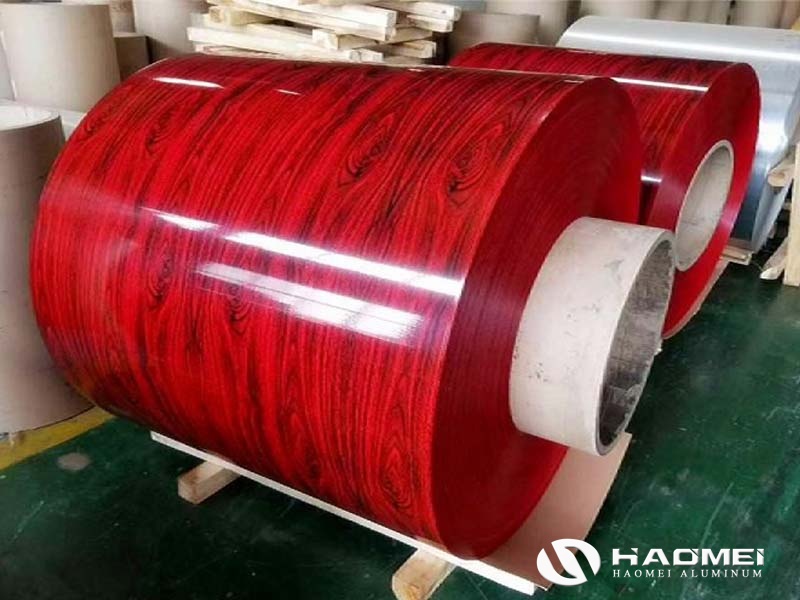
Wood effect aluminium is usually supplied in coil or sheet form. Common base materials include 1100, 3003, 3004, 3105, and 5005 aluminium alloys. For most architectural and interior applications, 3003 and 3105 are popular because they balance formability, strength, and corrosion resistance. Where better surface flatness or anodizing-type quality is requested before coating, 5005 can also be selected.
Typical thickness ranges from 0.20 mm to 3.00 mm, depending on the application. Thin coils are often used for ceiling strips, wall cladding, and composite panel production, while thicker sheets are preferred for curtain walls, facade panels, doors, and sunshade systems. Widths commonly range from 30 mm slit coils to 1600 mm wide coils, with customized tolerances available for continuous production lines.
The coating system is the core of wood effect aluminium. A standard structure includes pretreatment, primer, base color coating, wood grain transfer or printing layer, and protective clear coating. PE, HDP, FEVE, and PVDF coating systems can be selected according to weather resistance requirements. For exterior use, PVDF or high-performance FEVE is recommended because UV stability and chalking resistance are more demanding. Coating thickness is commonly controlled at 18-35 microns for the top side, while the back side can be epoxy, PE, or service coating according to bonding and anti-corrosion requirements.
Our production team pays close attention to gloss, color difference, pattern repeat, adhesion, T-bend performance, pencil hardness, solvent resistance, and boiling water resistance. These details may look small, but they decide whether the material performs well during fabrication and installation.
Key Features That Define Good Quality
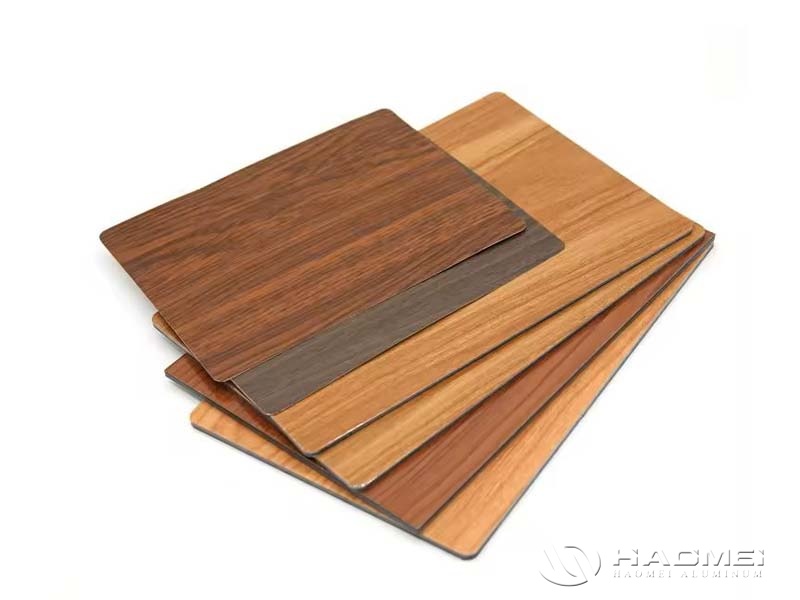
A high-quality wood effect aluminium surface should not look flat or artificial. The grain needs depth, natural color transition, and stable repeatability from coil to coil. When customers order for large facade projects, batch consistency becomes especially important because panels installed on the same elevation must match visually under sunlight.
Another important feature is formability. Good coated aluminium should withstand bending, punching, grooving, and roll forming without cracking or coating peeling. In our experience, many complaints in the market are not caused by the wood grain layer itself, but by poor pretreatment or an unsuitable coating formula. A stable chromate-free or chrome pretreatment process, correct curing temperature, and clean aluminium surface are essential.
For buyers comparing different decorative metal options, wood grain aluminium offers a useful balance between appearance and engineering performance. It is lighter than steel, easier to fabricate than solid timber, and more stable in humid or coastal environments.
Advantages Over Natural Wood and Other Materials
The first advantage is low maintenance. Natural timber often requires painting, sealing, or anti-termite treatment. Wood effect aluminium does not rot, warp, or attract insects, making it suitable for long-term building use. Cleaning normally only requires water and mild detergent.
The second advantage is weight reduction. Aluminium density is about one-third of steel, which helps reduce structural load and transportation cost. This is especially useful for ceiling systems, high-rise facade panels, and renovation projects where the existing structure has limited load capacity.
The third advantage is processing flexibility. Coils can be slit, cut to length, laminated, embossed, or formed into panels. Sheets can be CNC routed, folded, and assembled into cassette panels. For manufacturers of doors, ceilings, composite panels, and decorative profiles, continuous coil supply improves production efficiency and reduces material waste.
Environmental performance is also becoming more important. Aluminium is recyclable, and a durable wood effect surface can reduce demand for natural timber in some decorative applications. For green building projects, this combination of long service life and recyclability is a strong selling point.
Applicable Scenarios
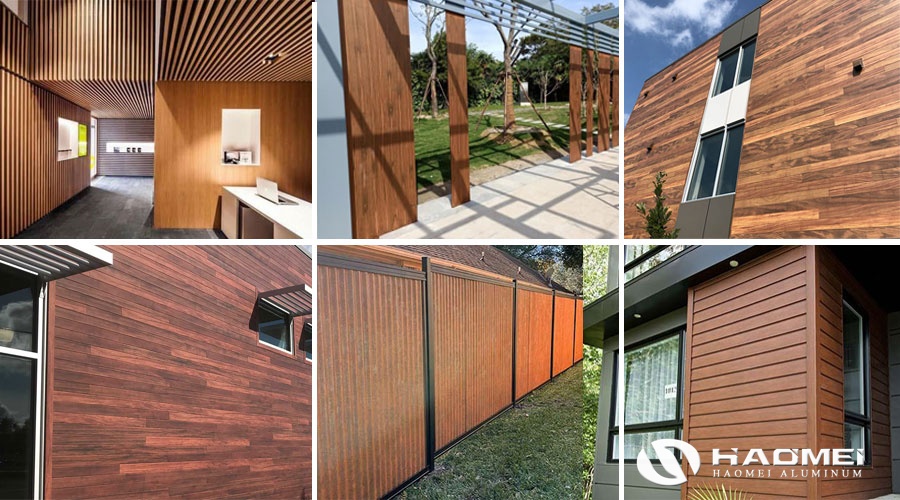
Wood effect aluminium is widely used in exterior facades, curtain wall panels, balcony ceilings, soffits, garage doors, fencing, louvers, window trims, and sunshade systems. It is also popular for interior wall panels, elevator decoration, shopfronts, hotel lobbies, exhibition booths, and transportation interiors.
For outdoor projects, I usually recommend confirming the building location before selecting the coating. A dry inland area may perform well with HDP or FEVE, while coastal, high-UV, or industrial environments should consider PVDF coating, higher film thickness, and enhanced salt spray resistance. For indoor decoration, PE coating can be economical and visually attractive when weather resistance is not the main concern.
Designers who want a warmer architectural appearance often use wood look aluminium to replace timber in areas exposed to sun, rain, and temperature changes. The material helps maintain a consistent modern style while avoiding the natural defects of wood.
Technical Selection Tips From Production Experience
When selecting wood effect aluminium, do not judge quality only by the sample appearance. Ask for alloy, temper, coating type, paint brand or performance level, film thickness, color tolerance, bending test data, and warranty conditions. If the material will be used for composite panels or adhesive bonding, the back coating must also be checked carefully.
Packaging is another point worth attention for export orders. Coils should be packed with moisture protection, edge protection, inner and outer steel guards, and strong wooden pallets. For sheets, flatness protection and surface film selection are important, especially for glossy or dark wood grains that can show handling marks more easily.
Good wood effect aluminium is the result of controlled substrate, reliable coating chemistry, accurate color management, and disciplined inspection. When these factors are managed well, the material gives projects a natural timber appearance with the strength, stability, and efficiency that modern aluminium systems are expected to deliver.
ABOUT US
PRODUCTS
APPLICATION
CONTACT US
Mobile: +86-18137889531 (same number on WeChat)
Phone: +86-371-65621391
Email: nydia@aluminumhm.com
No.14 Waihuan Road, CBD,
Zhengzhou, China


Copyright © 2026 Haomei Aluminum CO., LTD.